Emergency Leak Detection: Protecting Your Home While You Wait
| Quick answer: Emergency leak detection in Quakers Hill is the process of locating a hidden or fast-moving water leak using acoustic listening gear, thermal imaging, or pressure testing, so the pipe can be isolated and repaired before the damage spreads. While you wait for a plumber, your job is containment, not repair: turn off the water at the main meter, switch off power to any wet area at the switchboard, move belongings clear, and photograph everything for your insurer. Most water damage in the first hour is preventable with those four steps. |
On this page
- What counts as a leak emergency
- Your first five minutes
- Protecting your home while you wait
- What not to do before the plumber arrives
- How emergency leak detection works on site
- Documenting the damage for your insurer
- Reducing the odds of a repeat
- Frequently asked questions
The gap between the phone call and the van
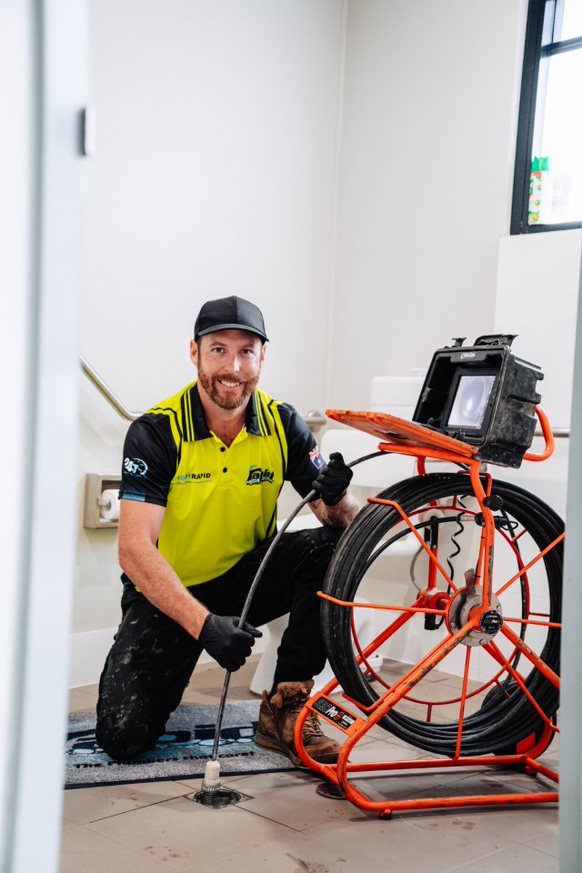
There is an awful stretch of time between realising water is going somewhere it should not and a licensed plumber standing in your hallway. Twenty minutes, maybe. On a wet Saturday night in Western Sydney, longer. What happens in that window decides how much of the job is plumbing and how much of it is carpet, plasterboard, and insurance paperwork.
That is really what emergency leak detection in Quakers Hill is about. Not just finding the pipe, but limiting the harm while the search is underway. Water travels. A pinhole leak in a wall cavity can run down a stud, along a bottom plate, and surface three metres away in a room that looks completely dry.
This guide covers what to do in the first few minutes, how to protect what is still safe, what to avoid, and what a plumber actually does when they arrive with the detection gear.
What counts as a leak emergency
Not every drip needs a midnight callout. A tap that weeps at the spindle can wait until business hours. The situations below generally cannot.
- Water you can hear but not see. A hiss or running sound with every tap closed usually means a pressurised line has failed somewhere hidden.
- A burst or split pipe. Fast-moving water from a supply line. Our guide to handling a burst pipe covers this one in detail.
- Water near electricity. Anything running into a ceiling cavity, down a wall with power points, or pooling near a switchboard or hot water unit.
- A warm patch on the floor. A warm spot underfoot on a slab can mean a failed hot water line beneath it. See our explainer on how leak detection works under concrete.
- A soggy patch in the yard that will not dry, especially in dry weather. This can point to a break on the main between meter and house, usually the owner’s responsibility. More in our post on soggy front lawns and water main leaks.
- A water meter that keeps ticking with every fixture in the house turned off.
If you are somewhere between “annoying” and “emergency”, the meter test is the tiebreaker. Turn off every tap and appliance, then watch the small dial on your meter for ten minutes. Movement means water is escaping somewhere. Crude, decisive, and free.
| Not sure whether what you are seeing is urgent? Our guide to the early warning signs of a hidden leak covers the quieter symptoms, including bill creep, damp smells, and pressure drops. |
Your first five minutes
Do these in order. They take a few minutes total and they are the highest-value thing you will do all day.
1. Shut off the water at the meter
Your main shutoff is at the water meter, usually near the front boundary in a green or black box at ground level. Turn it clockwise until it stops. If the leak is clearly isolated to one fixture, the small isolation valve behind it may be enough. When in doubt, kill the main. You can live without water for an hour; restoring a saturated subfloor takes far longer.
Worth doing before anything goes wrong: find your meter now and check the tap actually turns. Older valves seize, and 11pm with water coming through the ceiling is not the moment to discover it.
2. Cut power to anything wet
If water is anywhere near power points, light fittings, a ceiling cavity, or an appliance, switch off that circuit at the switchboard. Do not reach for a wet switch. If the switchboard itself is wet, stay out of the area and call an electrician along with your plumber. Water and electricity together is the one part of this that is dangerous rather than just expensive.
3. Relieve the pressure in the pipes
Once the main is off, open the lowest cold tap in the house, usually an outside garden tap or a laundry tub, then a high tap to let air in. This drains standing water out of the pipework and reduces what keeps seeping from the break.
4. If it is hot water, isolate the unit too
For a gas storage system, turn the gas control to off or pilot. For electric, switch off the dedicated circuit at the board. A unit that keeps heating while empty can be damaged, and hot water leaks carry a scald risk. Our article on hot water pipe leak emergencies has the specifics.
Protecting your home while you wait
Water is off, power is safe. Now you buy back everything you can before the plumber arrives.
Get things off the floor
Lift what you can, starting with anything absorbent or irreplaceable. Rugs, boxes, books, documents, power boards, pet bedding, the bottom shelf of the wardrobe. Furniture legs on wet carpet wick moisture upward and can stain timber permanently, so slide foil, plastic lids, or timber blocks under them.
Contain and channel the water
Towels soak, buckets catch. For a ceiling drip, put a container underneath. If the ceiling is bulging with trapped water, do not ignore it: saturated plasterboard is heavy and can collapse without warning. Plumbers often relieve it with a small controlled hole so the water drains in one place. If you are not comfortable doing that, clear the area underneath and mention it when you call.
Get air moving
Open windows and doors if the weather allows, and run fans across the wet surfaces rather than straight down at them. Air movement matters more than heat in the first hour. If you have a dehumidifier, run it with the room closed instead. Mould can establish in damp materials within a day or two, so early drying is not cosmetic.
Note what you are seeing
Note the timeline while it is fresh: when you first noticed it, what it sounded or smelled like, whether the water was hot or cold, how fast it rose. A leak that only appears when the shower runs tells a different story than one that runs constantly, and it changes where the plumber looks first.
| Comparing your options while you wait? Our breakdown of acoustic, thermal, and pressure testing compared explains what each technique can and cannot find, and our overview of non-invasive leak detection covers how a pipe gets located without opening walls. |
What not to do before the plumber arrives
Some instincts make things worse.
- Do not cut into walls or ceilings to find the leak. You will probably guess wrong, and every hole is another repair. Detection equipment exists so this is not done blind.
- Do not tighten fittings hard with a wrench. Corroded or aged brass can snap under pressure, turning a weep into a flood.
- Do not pour drain chemicals in. If the water is coming from a drain, caustic products sitting in a cracked pipe make the job harder and more hazardous.
- Do not turn the water back on to “check if it stopped”. It did not. You will just resume the leak, often somewhere you cannot see.
- Do not throw out damaged items yet. Insurers frequently want to see them, or at least photographs, before disposal.
- Do not enter a flooded room with a live power circuit. No exceptions.
How emergency leak detection works on site

The work is usually less dramatic than people expect. Good leak detection is a process of elimination done in a sensible order.
Isolation and meter testing. The plumber confirms the leak is on your side of the meter, then isolates sections of the property to narrow down which line is losing water. This alone often halves the search area.
Acoustic listening. Escaping pressurised water makes a distinct sound that carries through the pipe wall and surrounding material. Ground microphones and listening sticks trace it to within a small area, even under concrete or paving. It works best when the property is quiet, which is why a plumber may ask you to switch off appliances.
Thermal imaging. A thermal camera reads surface temperature differences. It is excellent for hot water leaks under slabs and behind walls, and useful for mapping how far moisture has spread through a cavity.
Pressure testing. Isolating and pressurising a section confirms whether that run holds. It does not say where the leak is, but it reliably says which line is at fault.
Tracer gas and CCTV. For stubborn or buried leaks, a safe gas mix can be introduced into an emptied line and detected where it surfaces. For drains rather than supply lines, a drain camera is the tool of choice.
Most jobs use two or three of these together, because each has blind spots. Acoustic work is difficult on a noisy street. Thermal imaging struggles with cold water leaks in a cold slab. The combination is what makes the location reliable rather than a guess.
Key takeaways
- Shut off the water at the meter first. Everything else is secondary.
- Kill power to any wet circuit before you go near the water.
- Lift, move, and protect belongings rather than trying to fix the pipe.
- Photograph and film everything before you clean up.
- Get airflow into wet rooms early to limit mould risk.
- Leave the wall and ceiling cutting to the person with the detection gear.
Documenting the damage for your insurer
Most home and contents policies in Australia cover sudden water damage from a burst or escaped water event, while gradual, long-term seepage is often excluded. Policies vary, so check yours rather than assuming. Either way, the evidence you gather in the first hour tends to matter.
Before you mop anything, take wide shots of each affected room, then close-ups of the water line on walls and skirtings, damaged flooring, and affected contents. Film a slow walkthrough with commentary noting the time. Keep the plumber’s invoice and report, since it establishes cause and date, which is usually the sticking point in a claim. Keep receipts for fans, dehumidifier hire, or tarps too, as many policies reimburse reasonable mitigation costs. Notify your insurer early, even before the full extent is known.
Reducing the odds of a repeat
Emergencies are rarely random. Around Quakers Hill, Marayong, Schofields, and Acacia Gardens, the two most common back-stories are aging galvanised or early copper pipework in older homes, and ground movement in reactive clay soils stressing joints in newer slab construction. Both tend to give warning signs before they fail outright.
A few habits help. Read your water meter monthly and note the number, so a slow rise stands out. Check under sinks and behind the cistern for green or white crusting on fittings, which signals a weep. Watch for paint bubbling along the bottom of walls or lifted skirting, and take a persistent musty smell seriously. If your hot water system is past ten to twelve years old, plan its replacement rather than waiting. Pools and irrigation lines deserve their own check, since losses under a lawn are easy to miss: our guide to leak detection for pools, irrigation, and outdoor lines covers those.
Frequently asked questions
How quickly can a plumber get to an emergency leak in Quakers Hill?
Response times vary with time of day, weather, and how many callouts are already running, with storm nights the busiest. When you call, say whether water is near electricity and whether you have shut off the main, since that helps with prioritising. Local Quakers Hill Plumber runs a 24/7 emergency line on 02 9158 3597.
Should I turn off the water even if the leak looks small?
If it is on a pressurised supply line and you cannot isolate that one fixture, yes. Small leaks can enlarge suddenly, and there is little downside to an hour without water. If the water is coming from a drain instead, shutting the main will not stop it, but avoid using fixtures that feed that drain.
Can I find the leak myself before the plumber arrives?
You can narrow it down, and that helps. The meter test tells you whether water is escaping, and noting whether the leak worsens when a particular fixture runs tells the plumber which line to suspect. What you should not do is open walls, floors, or ceilings looking for it.
Does emergency leak detection damage walls or floors?
Usually not. Acoustic listening, thermal imaging, and pressure testing are all non-invasive, and the point of them is to pinpoint the leak so any access hole is small and in the right place. Some access is normally needed for the repair itself, but detection keeps it to a minimum.
Is a slab leak covered by home insurance?
It depends on the policy and the cause. Many cover the resulting water damage from a sudden escape of water but exclude repairing the pipe itself, and gradual deterioration is commonly excluded. Read your product disclosure statement or ask your insurer, and keep the plumber’s written report, since it documents whether the failure was sudden.
What does emergency leak detection cost?
It depends on how accessible the leak is, which methods are needed, and whether the work is after hours. Detection on an accessible line is a smaller job than tracing a slab leak under a finished floor. Ask for an upfront quote before work begins. Our article on what leak detection costs and what is included explains how jobs are scoped.
| Water where it should not be? Call now, then start containing.Local Quakers Hill Plumber runs a 24/7 emergency service across Quakers Hill and the surrounding Blacktown suburbs, with licensed plumbers, upfront quoting, and full leak detection equipment on board.Call 02 9158 3597 or visit our emergency plumbing service page. You can also get in touch here or see everything we cover across Quakers Hill and nearby areas. |