Rainwater Tank Installation: Plumbing to Toilets and Laundry Explained
| Quick answer: A rainwater tank installation that feeds your toilets and laundry runs a separate, clearly labelled non-drinking water line from a pump on the tank to your toilet cisterns and the cold tap behind your washing machine. Because those fixtures cannot run dry, the system also needs either a mains top-up into the tank or an automatic switching device that flips to town water when the tank empties, plus backflow protection so tank water can never travel back into the drinking supply. In NSW this is licensed plumbing work, and Sydney Water requires your plumber to book and pay for a NSW Fair Trading inspection whenever a tank is connected to a toilet, washing machine or hot water system. You should receive a Certificate of Compliance at the end. |
What this guide covers
- Why toilets and laundry are the fixtures worth plumbing
- Sizing the tank for your roof and your household
- What a rainwater tank installation actually involves
- Keeping the supply going when the tank runs dry
- Backflow prevention, labelling and NSW compliance
- Approvals, BASIX and Blacktown City Council
- Looking after the system once it is in
- Frequently asked questions
Most people who put in a tank start out watering the garden with it, then notice something frustrating. The tank sits full through a wet winter, overflows into the stormwater drain during every decent downpour, and the water meter keeps ticking over inside the house regardless. All that stored water is doing almost nothing for the bill.
Plumbing the tank into your toilets and laundry is what changes that. It turns a seasonal garden resource into a supply the household draws on every day, wet weather or dry. It is also the point where a rainwater tank installation stops being a delivery-and-drop job and becomes real plumbing work, with cross-connection risks, continuity requirements and an inspection at the end. Here is how the system goes together and what the rules require in Quakers Hill.
Why toilets and laundry are the fixtures worth plumbing
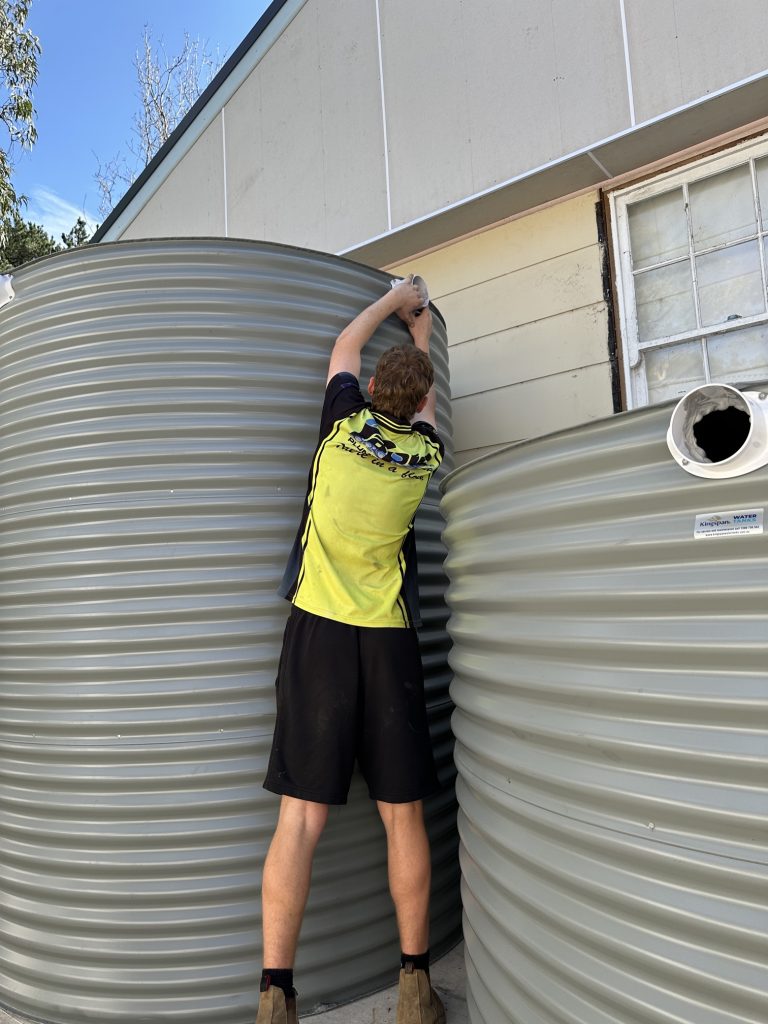
Toilet flushing and clothes washing are the two biggest routine indoor uses of water in most Australian homes, and neither needs drinking-quality water. A cistern refills after every flush whether it rains or not, and a washing machine runs on a schedule that has nothing to do with the weather. That steady, predictable, non-drinking demand is exactly the profile you want if you are trying to make a tank pay its way. Garden taps, by contrast, are a poor match on their own: you use them most in summer, when the tank is often lowest, and barely at all through the wet months when it is overflowing.
NSW Health supports using rainwater for toilet flushing, laundry, hot water, garden watering and car washing where mains water is available. What it does not recommend is drinking tank water when a reticulated supply is on hand, which is why the kitchen tap and bathroom basins stay on mains and the rainwater line stays separate and labelled.
| Still weighing it up? If you are not sure whether your roof area, tank position or existing pipework suit an internal connection, it costs nothing to ask. Have a look at what is involved in rain water tank and pump installation and repairs, or read through the things to consider before a water tank installation to get your bearings first. |
Sizing the tank for your roof and your household
The catchment side is simple arithmetic. One millimetre of rain on one square metre of roof produces roughly one litre of water, so a 200 square metre roof catches around 200 litres per millimetre that falls. Take off what the first flush diverter dumps, what splashes over the gutter in heavy rain, and what stays in the pipes, and plan on collecting meaningfully less than that. Rainfall itself is unpredictable, so treat any annual estimate as a rough planning number and check current Bureau of Meteorology data for your postcode.
Two constraints usually settle the choice before the maths does. The first is space: Quakers Hill blocks, especially in the newer estates, often will not take a squat round tank, which is why slimline tanks that hug a side boundary are so common here. The second is weight. A full tank is enormously heavy, because 1,000 litres of water weighs one tonne, so a 5,000 litre tank carries five tonnes once it fills. The base has to be built for that, not improvised.
What a rainwater tank installation actually involves
A properly done rainwater tank installation runs in a set sequence, and skipping ahead is where problems start.
1. Catchment, gutters and first flush
Everything begins on the roof. Gutters need to be sound, correctly falling and reasonably clean, because whatever sits in them ends up in your tank. Leaf guards reduce the organic load, and a first flush diverter sends the dirtiest initial run of each rain event away from the tank. If your stormwater already struggles in heavy rain, sort that out first: the same blockages that cause a stormwater drain to overflow with leaves and flood the yard will happily fill your tank with sludge.
2. The tank and its base
The tank sits on a level, compacted, load-rated base: a concrete slab, a properly prepared crusher dust or sand pad, or a purpose-built stand. It needs to sit clear of water and sewer mains, with access left for cleaning and pump servicing. Inlets get insect-proof screening so mosquitoes cannot breed in the stored water, and the overflow is plumbed to the stormwater system, never to the sewer.
3. The pump
Gravity alone will not run a cistern or a washing machine at usable pressure, so almost every internally connected tank needs a pump, either an external unit beside the tank or a submersible one inside it. It needs weatherproofing, power, and a suction point set up off the tank floor so it is not constantly drawing sediment. Pump choice matters more than people expect: it has to deliver pressure close enough to mains that the switch between sources is not obvious at the fixture, and it has to cope with the short, frequent draws a cistern makes without cycling itself to death.
4. The internal pipework
This is the part that makes it a licensed job. A dedicated non-drinking water line runs from the pump into the house and splits to the toilet cisterns and the cold tap serving the washing machine, staying entirely separate from your drinking water pipework with no cross-connections anywhere along its length. In an existing home the route is the real design problem: reaching a second-storey toilet, or a laundry on the far side of the house, can mean going through a slab, a ceiling cavity or an external wall. It is the same reason renovations in Quakers Hill need a licensed plumber rather than a general handyman.
Keeping the supply going when the tank runs dry
You cannot have a toilet that stops flushing because it has not rained for a month. Where rainwater serves a fixture like a cistern or a laundry outlet, the system has to guarantee continuity of supply. There are two accepted ways to do it, and they behave quite differently.
Mains top-up. A small town water feed trickles into the tank whenever the level drops below a set point, keeping a reserve in the bottom. It is mechanically simple, and because the top-up enters through an air gap above the water line there is no direct connection between the two supplies. The trade-off is that you are storing mains water in the tank and pumping it back out, which costs electricity and leaves less headroom for the next rain event.
Automatic switching. A changeover device at the pump monitors tank level and switches the internal line to mains pressure when the tank runs low, then back once it refills. Your fixtures never notice. This keeps the tank ready to catch the next downpour and does not waste pump energy moving town water around, but the device is another component to install and service. Which option suits you depends on tank size, pump choice, and sometimes what your BASIX certificate specifies.
| Getting quotes? Compare like for like. A quote covering only the tank and a pump is not the same job as one covering the internal connection. Make sure yours spells out the switching device or top-up arrangement, the backflow protection, the non-drinking water labelling, and the NSW Fair Trading inspection. Local Quakers Hill Plumber quotes free of charge and prices by the job, so you know what the internal connection costs before anyone starts work. |
Backflow prevention, labelling and NSW compliance
The moment your tank line and your drinking water line exist in the same house, the regulator’s concern is contamination. Everything below exists so that tank water can never end up in the town main.
Backflow prevention. Sydney Water advises checking your backflow prevention requirements before connecting a tank to a toilet or washing machine, as you may need a property-specific device. What is required depends on how the two supplies interact and the hazard rating that applies. Where a testable device is fitted, it typically needs annual testing by a licensed plumber with backflow accreditation, so treat that as an ongoing cost.
Labelling and identification. Rainwater pipes and outlets must be clearly identified as non-drinking water, with labelling repeated at intervals along the run, and rainwater taps should look different from drinking taps. The point is that whoever opens a wall or a cupboard in ten years, including a future owner or another tradesperson, can tell instantly which line is which.
The inspection and your certificate. Sydney Water requires your plumber to book and pay for a NSW Fair Trading inspection for any rainwater tank installation connected to a toilet, washing machine or hot water system, or where the tank is topped up by or switched to the drinking water supply. Ask for your Certificate of Compliance once the work is finished. It certifies the work meets the Plumbing Code of Australia, and it is the document you will want when you sell the house.
Approvals, BASIX and Blacktown City Council
For a new build or a major renovation in NSW, a BASIX certificate sets water savings targets for the dwelling, and a tank plumbed to toilets and laundry is one of the most common ways of hitting them. If BASIX specifies a tank of a given size connected to particular fixtures, that is what has to be installed, and the certifier will check at completion.
For an existing home, many smaller tanks can go in as exempt development under the State Environmental Planning Policy for exempt and complying development, provided tank size, siting, setbacks and overflow all fall within the conditions. Larger tanks, unusual siting, or heritage and flood-affected land can change that. Quakers Hill sits in the Blacktown City Council area, so check current requirements with the council before you commit to a tank position. Keep the two ideas separate, though: a tank can be exempt from council approval and still require licensed plumbing work, backflow protection and a Fair Trading inspection the moment it feeds an internal fixture.
Looking after the system once it is in
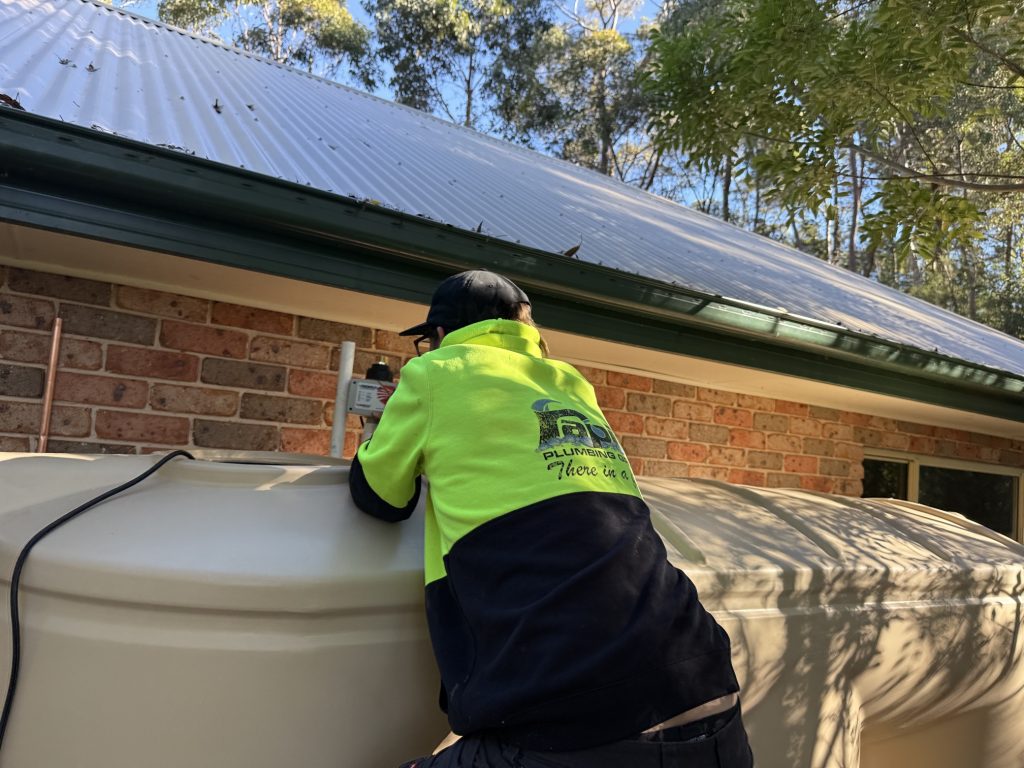
These systems are low maintenance, not no maintenance. A short annual routine keeps them healthy:
- Clear the gutters and check the leaf guards, ideally before storm season and again after autumn leaf drop.
- Clean or empty the first flush diverter so it works on the next rain event.
- Check the inlet and overflow screens are intact, with no gaps for mosquitoes or vermin.
- Listen to the pump. Short-cycling, rattling, or running when nothing is drawing water all point to a problem worth catching early.
- Have the backflow device tested on schedule if a testable device is fitted.
- Check tank sediment every few years and have the tank cleaned out if it is building up.
Some faults show up at the fixtures rather than at the tank. A cistern that keeps refilling by itself will drain a tank surprisingly quickly, which is one reason it pays to know the six faults behind most toilet repair callouts. If the machine starts backing up, that is drainage rather than the tank, and the causes behind a washing machine overflowing the laundry tub are worth knowing before you blame the pump. For anything outside the tank system, ordinary general plumbing repairs apply as normal.
Key takeaways
- Toilets and laundry are the highest-value fixtures to plumb to a tank: steady, indoor demand that does not need drinking-quality water.
- One millimetre of rain on one square metre of roof yields about one litre, and 1,000 litres of stored water weighs one tonne, so catchment and base preparation both need real numbers behind them.
- Internal connections need continuity of supply, via either a mains top-up or an automatic switching device at the pump.
- Backflow prevention, non-drinking water labelling and separation from the drinking supply are non-negotiable.
- Sydney Water requires a NSW Fair Trading inspection for tanks connected to a toilet, washing machine or hot water service, and BASIX may dictate tank size on new builds. Confirm siting with Blacktown City Council.
Frequently asked questions
Can I connect a rainwater tank to my toilet and washing machine myself?
No. Connecting a tank to internal fixtures is licensed plumbing work in NSW, and it triggers a NSW Fair Trading inspection that your plumber has to book and pay for. Beyond the legal issue, an incorrect connection between tank water and the drinking supply is a genuine public health risk. You can generally set up a tank for garden use yourself, but the internal connection is not a DIY job.
What happens when the tank runs out of water?
Nothing you will notice, if the system is set up correctly. Either a mains top-up keeps a reserve in the bottom of the tank, or an automatic switching device changes the internal line over to town water until the tank refills. Both approaches are designed to give you continuity of supply, so the toilet keeps flushing and the washing machine keeps filling regardless of the weather.
Should I connect the hot water service to the tank as well?
It is permitted, NSW Health supports rainwater for hot water use, and some BASIX certificates require it. It does bring extra requirements, including minimum storage temperatures to manage Legionella risk, and it increases the load on your tank. On a new build, check what your BASIX certificate specifies. On a retrofit, most households start with toilets and the laundry cold tap and consider hot water separately.
How much can I expect to save on my water bill?
It depends entirely on roof area, tank size, local rainfall and household size, so be sceptical of anyone quoting a fixed percentage. What can be said is that toilets and laundry represent a large and consistent share of indoor water use, so shifting that demand to rainwater has a far bigger effect on the bill than garden use alone.
Can a tank be connected in an existing home, or only a new build?
Retrofits are common. The harder part is usually the pipe route rather than the tank, since the new non-drinking water line has to reach the cisterns and the laundry without cross-connecting to existing drinking water pipework. A plumber will assess your slab, wall cavities and laundry position and work out the cleanest run before quoting.
Does a rainwater tank need council approval in Quakers Hill?
Many smaller domestic tanks can be installed as exempt development under the State Environmental Planning Policy for exempt and complying development, provided size, setbacks, siting and overflow all comply. Larger tanks or difficult sites may need approval. Quakers Hill falls within the Blacktown City Council area, so confirm current requirements with the council before finalising the tank position. Council approval and plumbing compliance are separate matters.
| Ready to plumb your tank to the toilets and laundry? Local Quakers Hill Plumber is a family owned and operated company working across Quakers Hill and the wider Blacktown area. Our licensed plumbers handle the whole job: tank base and set-up, pump selection, the internal non-drinking water line, backflow protection, the switching or top-up arrangement, and the NSW Fair Trading inspection, with your Certificate of Compliance at the end. Quotes are free and priced by the job. Call 02 9158 3597, available 24/7, or get in touch through our contact page. |