Washing Machine Overflows the Laundry Tub: What’s Blocking the Drain
Why this overflow happens
When your washing machine drains, it doesn’t trickle water out like a tap. It pumps water out fast. That fast surge hits your laundry tub drain (or standpipe) all at once. If the drain line is partly blocked—even just a little—the water can’t move away quickly enough, so it backs up and spills over the edge of the tub (many of the same causes show up in guides on why a washing machine won’t drain).
In residential plumbing in Penrith, this is a common call-out because many homes have:
- older drain lines with rough internal pipe walls that catch lint and sludge
- outdoor pipes exposed to tree root intrusion
- shared drain lines (laundry connected to bathroom or kitchen drains)
What a plumber is really looking for:
We’re not just thinking “something is stuck.” We’re figuring out:
- Where the restriction is (trap, pipe bend, main line, outside gully, or sewer)
- What caused it (lint, detergent sludge, roots, foreign object, damaged joint)
- How to clear it so it doesn’t keep coming back
If overflow is happening repeatedly, it often needs a proper drain inspection and cleaning, not just a quick flush.
How the laundry tub drain system works
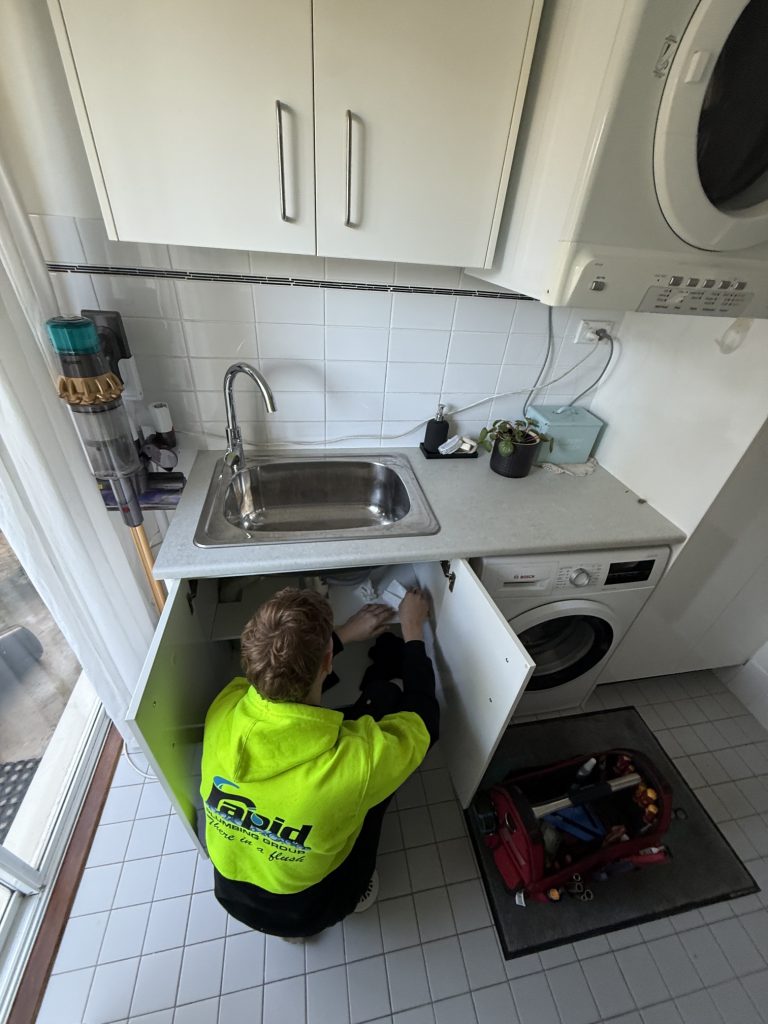
Your laundry tub and washing machine connect to a simple system, but small problems in any part can cause overflow.
The typical pathway (step-by-step)
- Washing machine hose sends water into the tub or standpipe.
- Water drops into the tub waste outlet and goes through the trap (U-bend/S-bend).
- It flows into a branch line (inside the wall/floor).
- That branch line connects to larger pipes leading to:
- an outside gully (common in Australia), then
- the main sewer line
Why it matters
A washing machine discharge can be 40–60+ litres draining quickly, especially on spin cycles. The drain must handle a high-flow dump without slowing down.
Related services we use to diagnose this properly
At Local Quaker Hills Plumber, we use tools and methods that fit the situation, such as:
- CCTV drain camera inspections to find the blockage location and cause
- Blocked drain clearing and repairs for laundry branch lines and main drains
- High-pressure water jetting to clear lint sludge, grime, and root intrusion
- Drain/sewer cleaning to restore full flow and reduce future buildup
The most common things blocking a laundry drain (and what they look like)
Below are the most common causes we see in Penrith homes and surrounding suburbs. Each one blocks drains differently.
1) Lint and fabric fluff buildup
Lint doesn’t just float away. It sticks to the inner wall of the pipe—especially if your pipes are older or have rough joins.
Why it forms blockages:
- It clumps together like wet felt
- It catches on bends and joints
- It collects detergent residue and becomes a sticky “lint mat”
Signs this is your issue:
- overflow happens during drain/spin, not while filling
- tub drains slowly even after the machine stops
- grey “muck” is visible around the tub waste
How we fix it professionally:
- Drain cleaning to remove lint mats in the trap and branch line
- Water jetting to scour the inside of pipes clean (not just poke a hole)
- Camera inspection if it keeps returning in the same spot
2) Detergent sludge (powder build-up, cold wash residue)
Detergent can build up like toothpaste inside drains. Cold washes and too much powder make it worse.
Why it blocks drains:
- detergent combines with lint and minerals in water
- it sticks to pipe walls and traps more debris
Signs:
- musty smell from tub drain
- slow draining that gets worse over weeks
- sticky residue in the trap
Our service link:
- Drain/sewer cleaning
- Water jetting
- General plumbing inspection and testing to confirm flow is restored
3) Hair, pet fur, and heavy laundry debris
Pet bedding, mop heads, dusty rugs, and workwear can send extra solids down the drain.
What happens:
- hair and fur twist with lint
- it forms a rope-like clog in the pipe bend or junction
Fix options:
- Blocked drain clearing
- Water jetting for full pipe-wall cleaning
- Laundry drain repairs if a joint is catching debris
4) Foreign objects (coins, socks, buttons, bra wires)
Small items can slip into the washing machine and end up stuck in the trap or pipe bend.
Signs:
- sudden overflow (it worked fine, then suddenly didn’t)
- rattling noise or odd drain sounds
- trap is blocked when opened
How we solve it:
- remove trap blockage and check junction points
- CCTV camera if the object is deeper in the line
- repair or replace a damaged bend if needed
5) Grease buildup from shared drain lines
Sometimes laundry and kitchen drains connect. If grease goes down kitchen sinks, it hardens and narrows the pipe.
Signs:
- laundry tub overflows and kitchen sink is slow too
- strong smell (greasy or sour)
- gurgling sounds when drains run
Services we use:
- High-pressure water jetting
- Drain/sewer cleaning
- General plumbing repairs if a section is badly coated or damaged
6) Tree roots in the drain or sewer line
Tree roots are a major cause in many Australian homes. They sneak into tiny cracks, loose joints, or aging pipes.
What roots do:
- grow into a “web” inside the pipe
- catch lint, sludge, paper, and waste
- cause recurring blockages and overflow
Signs:
- repeated blockages
- multiple fixtures slow down
- outside gully fills or overflows
- problems get worse after rain
How we fix it properly:
- CCTV drain camera inspection to confirm root intrusion
- Root cutting / tree root removal
- Water jetting to clear and flush debris
- Drain repairs if pipe joints are broken or cracked
7) A damaged pipe joint, poor bend, or sagging section
If a pipe joint is misaligned or a drain section sags, it becomes a “catch point.” Debris collects there again and again.
Signs:
- overflow keeps happening in the same pattern
- frequent blockages despite cleaning
- camera reveals offsets, cracks, or dips
Fix:
- Drain clearing + CCTV confirmation
- Drain repairs (re-lining or replacing sections depending on damage)
Quick safety steps when the laundry tub starts overflowing

Overflows can cause water damage, mould, and electrical risk. These steps help you stay safe.
What to do right away
- Stop the washing machine (pause/cancel).
- If the floor is wet, don’t touch power points or extension cords.
- Turn off water at the taps if the machine keeps filling.
- Use towels, buckets, and a mop to control the spread.
- Keep kids/pets away from wet tiles (slip hazard).
- Open windows to reduce moisture (helps prevent mould).
When it’s an emergency
Call a 24/7 plumber if:
- water is near electrical outlets
- the overflow is severe and fast
- multiple drains are backing up (possible main sewer blockage)
- you smell sewage or suspect a sewer overflow
Our relevant services here:
- 24/7 emergency plumbing
- Leak detection (water leaks caused by overflow damage, hidden seepage)
- Blocked drain clearing for urgent backups
Easy checks you can do at home (before you call a plumber)
These checks help you decide whether it’s a minor issue or deeper blockage. If you’re unsure, stop and call us—especially if overflow is active.
Step 1: Check the washing machine hose setup
- Make sure it isn’t kinked behind the machine
- Ensure it’s secured correctly and not shoved too far into the drain
- Wipe lint off the hose outlet
Step 2: Test drain speed with tap water
Run the laundry tap into the tub:
- If it drains slowly, the blockage might be close (trap or branch line).
- If it drains fine, the blockage may be deeper and only shows under high-flow discharge.
Step 3: Inspect and clean the trap (if accessible)
Place a bucket underneath and carefully loosen the trap.
Common finds:
- lint mats
- sludge
- small objects
Step 4: Check the outside gully (very important in Australia)
If you have a gully near the laundry:
- run water and watch if the gully rises
- if it overflows, your blockage may be in the main line
Plumber support for this situation:
- Drain/sewer cleaning
- Camera inspection
- Water jetting
- Drain repairs (if damage is discovered)
What not to do
- Don’t keep running spin cycles “to force it through.”
- Avoid harsh chemicals if the blockage is severe (and especially if it could be a sewer backup).
How to tell if it’s a small clog or a bigger drain problem
This helps you decide whether you likely need professional drain equipment.
Likely a local blockage (laundry area)
- Only laundry tub is slow or overflowing
- Cleaning the trap improves flow
- No issues in other fixtures
Typical fix: trap cleaning + targeted drain clearing
Likely a deeper blockage (main drain/sewer)
- Gurgling in nearby drains
- Slow toilet or shower drains
- Outside gully fills or smells
- Overflow happens mainly during washing machine discharge
Typical fix: CCTV inspection + water jetting + drain repair if needed
This is common in residential plumbing in Penrith, where tree roots and older drains often create ongoing restrictions.
How a professional plumber finds the blockage fast (and safely)
DIY can help with minor clogs, but professional tools solve recurring or deep blockages properly.
CCTV drain camera inspection
We insert a drain camera to:
- locate the blockage exactly
- identify what it is (roots, object, sludge)
- check for cracks, dips, and misaligned joints
This helps avoid “guesswork” and repeat call-outs.
High-pressure water jetting
Water jetting is one of the best tools for laundry drains because it:
- breaks down lint mats and detergent sludge
- flushes debris away
- clears root intrusion in many cases
- cleans pipe walls so flow returns to normal
Blocked drain clearing and repairs
If the pipe is damaged, clearing alone won’t solve it long-term. We can handle:
- drain and sewer cleaning
- repairs to cracked or offset sections
- addressing bends/joints that trap debris
Why laundry drain blockages often come back (and how to prevent them)
If you’ve cleared it before but it returns, there’s usually a repeat cause.
Repeat causes
- underlying tree root intrusion
- damaged joint or sagging pipe section
- sludge buildup from cold washes + excess detergent
- shared drain line issues (kitchen grease affecting laundry drain)
Prevention tips (simple but effective)
- Use the correct detergent amount.
- Do a hot wash occasionally.
- Use a lint catcher if you wash lots of fluffy loads.
- Shake out heavy debris (sand, soil) before washing.
- Book a drain camera inspection if the blockage repeats.
Service tie-in:
We offer inspections and testing, drain camera inspections, and drain cleaning so you can fix the root cause, not just the overflow.
Local Penrith note: why acting early matters
In Penrith and nearby areas, we often see:
- strong tree root growth around older drains
- long drain runs where debris settles
- older joints that shift or crack over time
A “small slow drain” can become a messy overflow fast—especially when your washing machine discharges a full tub of water quickly.
Early action saves you:
- water damage costs
- mould risk
- repeat blockages
- emergency call-outs
FAQs (quick answers people in Penrith search for)
Why does the laundry tub overflow only during the spin cycle?
Because the washing machine drains fast. A partial blockage can’t handle the rush.
Can my hot water system cause this overflow?
Not directly—but plumbing layout issues (shared lines, poor venting) can contribute to poor draining. We can assess this during a plumbing inspection.
Do I need a plumber if I cleaned the trap and it still overflows?
Yes—this likely means the blockage is deeper in the pipe or main line. A camera inspection makes diagnosis quicker and more accurate.
Is tree root removal permanent?
Roots can return if the pipe is cracked or joints are loose. If we find damage, we may recommend repairs to prevent repeat intrusion.
What if I smell sewage?
That’s a sign the blockage could involve the sewer line. Stop using water and call a plumber to prevent an overflow.
Call Local Quaker Hills Plumber for fast drain clearing in Penrith
If your washing machine is overflowing the laundry tub, don’t waste time with repeat cycles and quick fixes that don’t last. Let’s find the real cause and clear it properly.
Local Quaker Hills Plumber can help with:
- 24/7 emergency plumbing
- Blocked drain clearing and repairs
- High-pressure water jetting
- Drain/sewer cleaning
- CCTV drain camera inspections
- Tree root removal
- General plumbing repairs and installations (taps, toilets, showers, inspections/testing)
- Leak detection (water, shower, pool, and gas)
- Gas fitting and gas plumbing (installs, repairs, gas leak detection)
- Hot water system supply, installation, servicing, and repairs (gas, electric, instant, heat pumps, solar, and commercial)
- Water filtration solutions
For reliable residential plumbing in Penrith, call now and we’ll get your drains flowing again—fast, clean, and done right.
📞 Call Local Quaker Hills Plumber: 291583597