Leaking at the Base: What a Toilet Repairs Plumber in Quakers Hill Will Do
| Quick answer: Water pooling around the bottom of a toilet usually points to one of four things: a failed pan connector or floor seal, a cracked pan, loose fixings that let the pan rock, or water running down from the cistern connection above. A toilet repairs plumber in Quakers Hill will first confirm where the water is actually coming from using a dry-and-watch check and a dye test, then work from the easiest cause to the hardest. If the seal below the pan has gone, the pan is lifted, the connector is replaced, the pan is levelled and refixed, and the joint is tested before the job is signed off. A cracked pan cannot be patched and needs replacing. |
On this page
- Why water shows up at the base and not anywhere else
- The common causes, from most likely to least
- What a toilet repairs plumber in Quakers Hill actually does on site
- Why sealing around the base yourself usually makes it worse
- What to do before the plumber arrives
- When it stops being a nuisance and becomes urgent
- Frequently asked questions
Why water shows up at the base and not anywhere else
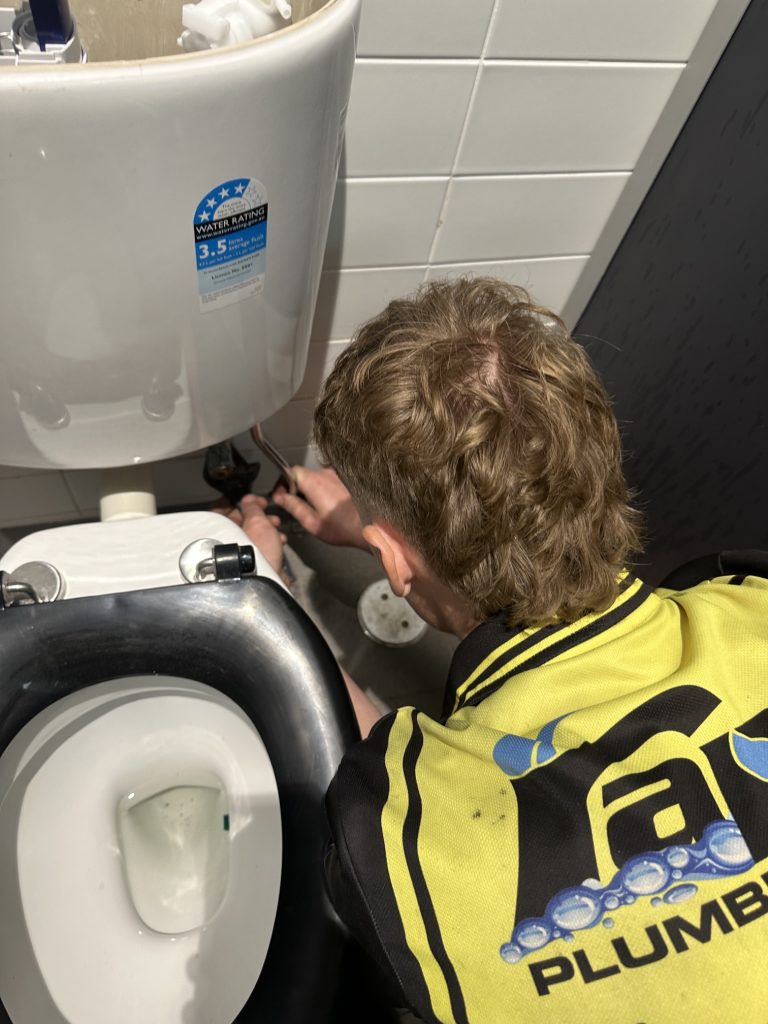
You notice it the same way most people do. A damp patch on the tiles that keeps coming back after you wipe it. A dark line in the grout at the front of the pan. A skirting board that has started to swell. The toilet flushes fine, nothing looks broken, and yet there is water on the floor.
The reason it shows at the base is simple. The bottom of the pan is the lowest point in the whole assembly. A weeping cistern washer two feet up runs down the back of the china and pools at the floor. A failed waste connection under the pan has nowhere to go but sideways. Condensation off a cold cistern does exactly the same thing. Very different faults, one identical symptom.
That is why a good toilet repairs plumber in Quakers Hill does not start by pulling the toilet up. They start by working out which of those stories the water is telling, because most of them do not require lifting the pan at all.
| Still working out whether this is a real problem? It helps to see how the same symptom shows up across different fixtures. Have a look at the full range of plumbing services we cover, or the guide on how to tell a blocked toilet from a blocked drain. |
The common causes, from most likely to least
1. A failed pan connector or floor seal
Most Australian toilets connect to the waste line through a rubber or flexible pan connector rather than the wax ring you see in American plumbing videos. Rubber perishes. Over years of heat, movement and cleaning chemicals it loses grip on the pipe or splits at the collar, and a little water escapes with every flush.
The tell is timing. Dry when the toilet sits unused, damp shortly after a flush, and the problem is almost certainly at the pan outlet.
2. A cracked pan
Vitreous china is strong until it is not. Hairline cracks form from impact, over-tightened fixings, ground movement, or thermal shock. A crack low on the pan or in the trap weeps continuously rather than only after a flush, and often does not show on the outside surface until the pan is lifted. This is the outcome nobody wants, because a cracked pan cannot be sealed or patched back into service. It needs replacing.
3. Loose fixings and a rocking pan
If the pan moves even slightly when you lean on it, the seal underneath is being flexed thousands of times a year and will eventually give up. Loose fixings are often a symptom rather than the cause, since pans usually start rocking because of an uneven floor, compressed packing, or fixings set into tile without proper support. There is more on that in this piece on why a new toilet keeps rocking and how plumbers stabilise it.
4. Water coming from above, not below
The cistern-to-pan washer, inlet valve, flexible supply hose and isolation tap all sit above the floor, and any of them can weep a slow drip that runs down the back of the pan. From where you are standing it looks identical to a failed floor seal. It is good news when it turns out to be the cause, because supply side repairs are typically quicker and less invasive.
5. Condensation
In humid weather a cistern full of cold mains water can sweat heavily enough to wet the floor. There is no leak to repair, but it is worth ruling out before anyone starts dismantling things.
6. A drainage problem pushing water back out
Less common, but worth knowing. If the line downstream is partially blocked, waste can back up and force water out at the weakest point in the pan joint. Resealing the toilet then fixes nothing, because the real issue is further down the pipe. Recurring blockages, gurgling from other fixtures, or a sewage smell in the backyard near the drain line all point this way and call for blocked drain clearing instead.
What a toilet repairs plumber in Quakers Hill actually does on site
Here is the sequence a methodical plumber follows. Knowing it helps you tell the difference between someone diagnosing your problem and someone guessing at it.
Step one: dry everything and establish a baseline
The floor, the base of the pan, the cistern and the supply line all get wiped completely dry, often with paper towel laid around the base. Then the toilet is left alone. Water appearing with no flush suggests a crack or a supply side drip. Water appearing only after a flush suggests the outlet seal.
Step two: check the supply side first
The flexi hose, isolation tap, inlet valve and cistern washer get checked before anything is pulled apart, because they are the fastest things to rule in or out. A dry paper towel run along each connection finds a weep the eye cannot see.
Step three: the rock test and fixing check
Gentle pressure from several directions shows whether the pan moves, and the floor fixings get inspected. Movement changes both the diagnosis and the repair, because refitting a pan onto a floor that never supported it properly just recreates the same failure.
Step four: a dye test
Adding a food-safe dye to the cistern or pan water and flushing shows exactly where flush water is escaping. Coloured water at the base confirms the outlet seal. Clear water means it is coming from somewhere else and the search continues.
Step five: lift the pan if the evidence points below the floor
The toilet is isolated, drained, unbolted and lifted clear. This is a normal part of the job, not a sign something has gone badly wrong. With the pan out, the condition of the connector, the waste pipe, the floor around the penetration and the substrate underneath all become visible.
Step six: repair, refit and test
A typical reset involves a new pan connector, a properly cleaned pipe and pan outlet, packing and levelling so the pan sits flat with no rock, new fixings where needed, and a fresh silicone bead applied correctly. The job is not done there. The toilet gets refilled and flushed repeatedly, the base is dried and watched, and the joint is rechecked before anyone packs up. If a crack was found, the conversation shifts to pan replacement instead.
Step seven: report on anything the leak has damaged
Water escaping under a pan for months does not stay under the pan. Swollen particleboard, lifting tiles, damaged skirting or a compromised waterproofing membrane can all follow, and a plumber should tell you what they found even when the remedial work sits outside a plumbing scope. In older Quakers Hill homes a base leak sometimes reveals a wider issue calling for general plumbing repairs beyond the toilet itself.
| Comparing quotes? Ask each plumber how they intend to diagnose the leak before they quote a fix. A price for resealing a toilet, given without a dye test or a rock check, is a guess with a number on it. If you want to know who you are dealing with first, read the background on our team and the suburbs we cover around Quakers Hill. |
Why sealing around the base yourself usually makes it worse
It is the most tempting fix in home maintenance. A tube of silicone, ten minutes, a neat bead all the way around, and the water stops appearing on the tiles.
Except the water did not stop. It is escaping under the pan at the same rate, and the silicone has only removed its exit route, so it now soaks into the floor, the adhesive bed and whatever is below. On timber that is how you get rot in the joists. On a slab it will find a path eventually and may surface in the next room.
There is a second problem. A continuous bead all the way around is not how plumbers usually finish a pan. Common practice is to leave a small gap, often at the rear, precisely so a future seal failure becomes visible rather than hidden. The damp patch you are trying to eliminate is functioning as a warning system.
Worth noting too: in New South Wales most plumbing and drainage work is required to be carried out by an appropriately licensed person, and work done outside that framework can create problems with insurance and with future property sales.
What to do before the plumber arrives
- Turn off the isolation tap on the supply line if the leak is steady. If you cannot find it or it will not turn, say so when you book.
- Stop using that toilet if you have another. Every flush pushes more water into the floor.
- Dry the area and note whether the water returns after a flush or on its own. This one observation saves real diagnostic time.
- Take photos of the damp patch, the base, the cistern connection and any damage to skirting or flooring, in case you need to claim later.
- Do not silicone it. See above.
- Check the room below or behind. Ceiling staining or a damp wall means the leak has been running longer than you thought.
When it stops being a nuisance and becomes urgent
A slow weep is generally not a middle of the night problem. It becomes one when any of the following are true.
- Water surges up around the base during a flush rather than seeping, which suggests the drain line is backing up.
- Waste water rather than clear water is reaching the floor. That is a health issue and should not wait.
- The leak runs continuously and you cannot isolate the supply.
- Water is reaching an electrical outlet, a light fitting below, or a switchboard.
- It is the only toilet in the house and it is now unusable.
Any of those warrant a call to an emergency plumber rather than a booking for next week. Otherwise a scheduled appointment within a day or two is reasonable, provided you have isolated the water and stopped using the fixture.
Key takeaways
- Water at the base has at least six plausible causes, and not all of them are leaks. Diagnosis comes before repair.
- Timing is the most useful clue. Only after a flush points to the outlet seal. Continuously points to a crack or the supply side.
- A cracked pan cannot be repaired and needs replacing. Almost everything else is fixable.
- Silicone around the base hides the symptom and lets the water damage your floor unseen.
- Recurring leaks at the pan joint sometimes signal a drainage problem downstream.
- Isolate the water, dry the area, photograph the damage, and note the pattern before you call.
| Book a toilet repair in Quakers Hill. If there is water at the base of your toilet and you would rather have it diagnosed properly than guessed at, call Local Quakers Hill Plumber on (02) 9158 3597. We cover Quakers Hill and the surrounding Blacktown suburbs, we test before we quote, and we will tell you straight if the pan needs replacing rather than resealing. You can also send through the details and photos here and we will come back to you. |
Frequently asked questions
Is a toilet leaking at the base an emergency?
Usually not, provided the water is clear, the volume is small and you can shut the supply at the isolation tap. It becomes urgent if waste water appears, if water surges up around the base after a flush, or if the leak reaches electrical fittings. In those cases call an emergency plumber rather than waiting for a booking.
Can I just run silicone around the base to stop it?
It will stop water appearing on the tiles, but it will not stop the leak. The water keeps escaping under the pan and now soaks into the floor and any timber below instead. Many plumbers deliberately leave a small gap so a future seal failure becomes visible early, and sealing that gap removes your warning system.
How long does a toilet base repair usually take?
It depends on the cause. A weeping supply connection or failed cistern washer is often a short visit. Lifting a pan, replacing the connector and refitting takes longer, and a full pan replacement longer again, particularly if flooring underneath has been damaged. Expect a realistic time estimate once the cause is diagnosed, not before.
Does a leak at the base mean I need a new toilet?
Not in most cases. Most base leaks come from the pan connector, the fixings or a connection above the floor, all repairable with the existing pan in place. A replacement is generally only necessary when the pan is cracked, when it is old enough that parts are no longer available, or when the leak has run long enough that the floor underneath needs rebuilding anyway.
Could the water actually be coming from the shower or a pipe in the wall?
Yes, more often than you would expect. Water travels along the underside of tiles and follows the fall of the floor, so it can surface at the toilet base while originating elsewhere. A failing shower waterproofing membrane is a classic culprit, covered in the article on shower leaks behind tiles. A dye test rules the toilet in or out quickly.
I am renting. Who is responsible for the repair?
In general a landlord is responsible for keeping a rental property in a reasonable state of repair, so a leaking toilet caused by ordinary wear would normally fall to them, while tenant-caused damage may be treated differently. Report it in writing as soon as you notice it, keep a copy, and check your lease and the current NSW tenancy guidance for the obligations that apply to your situation.