New Toilet Keeps Rocking: Why It Happens and How Plumbers Stabilise It
A brand-new toilet should feel rock solid. If it wobbles when you sit, leans when you shift your weight, or makes a tiny “click” as it moves, something underneath isn’t supported properly. And while it might feel like a small annoyance, a rocking toilet can turn into a leaking toilet—fast.
Here’s why: toilets are heavy, and every small movement stresses the seal where the toilet connects to the drain. Over time, that seal can break, water can escape, and moisture can soak into grout lines, tile bedding, or even timber underneath. That’s when you go from “it rocks a bit” to “why does my bathroom smell damp?” or “why is the grout dark around the toilet?”
This pillar guide explains what causes a new toilet to rock, what you can safely check yourself, and how a professional plumber stabilises it properly. This is written for Aussie homes and finishes with exactly how Local Quaker Hills Plumber can help—especially if you need a quick fix as part of residential plumbing in penrith.
Why a rocking toilet is a bigger problem than it looks
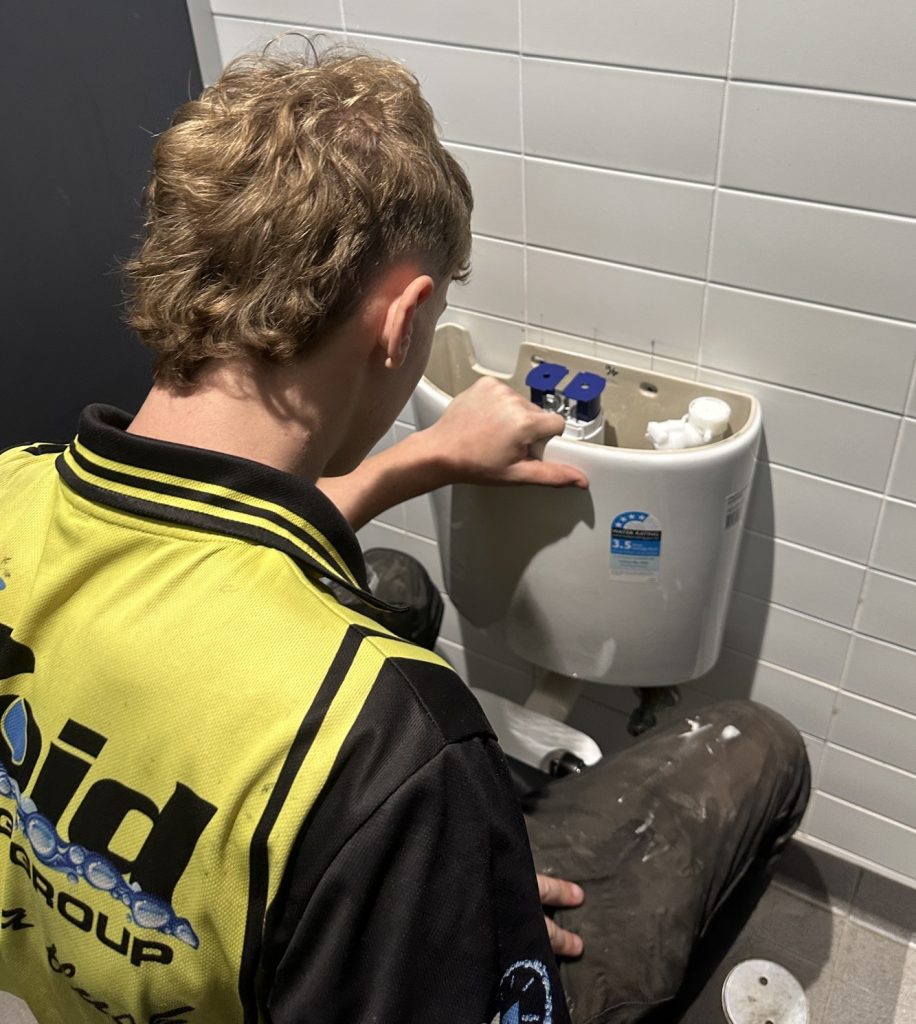
A rocking toilet isn’t just uncomfortable—it’s risky. The movement is like bending a paperclip back and forth. At first, nothing looks wrong. Then one day it suddenly fails.
Here are the real problems we see when a toilet rocks:
1) The seal can fail and let water leak under the toilet
Most toilets rely on a watertight seal between the toilet outlet and the drain connection. If the toilet shifts repeatedly, that seal can distort, split, or compress unevenly. Even a tiny leak can:
- stain grout and cause discolouration around the base
- seep under tiles and soften adhesives
- rot timber subflooring (common in older Aussie homes)
- trigger mould growth you can’t see until it’s advanced
If you’re also noticing slow draining, gurgling, or a “toilet bubbles when the shower runs” situation, we may be looking at more than a stability issue—sometimes it’s linked to blocked drains or partial sewer obstruction. That’s where our drain camera inspections and water jetting services come in.
2) It can crack the porcelain
Porcelain is strong, but it doesn’t like uneven stress. If a toilet rocks on one “high point” (like a tile ridge or a flange), the pressure concentrates in one area. Over time, that can cause hairline cracks—especially near the base.
A cracked toilet isn’t just a replacement issue. A crack can leak, worsen suddenly, and become a safety hazard.
3) It can loosen fixings and damage the floor
Once movement starts, bolts gradually loosen. That leads to more movement, more stress, and more damage. In tiled bathrooms, repeated rocking can also chip tile edges or crack grout lines.
And if the toilet was sealed to the floor with silicone while still rocking, the silicone can tear and allow moisture underneath—where it stays trapped.
4) It can allow sewer odours into the bathroom
Even without obvious water leaks, a compromised seal can let sewer gases escape. If your bathroom sometimes smells “drainy,” especially after flushing, that’s a red flag.
In those cases, a plumber doesn’t just stop the wobble—we also check the system health. If needed, we can run drain/sewer cleaning, use a CCTV camera inspection, and identify whether there’s a venting or partial blockage issue contributing to pressure changes.
The most common reasons a “new” toilet rocks (and why they happen)
Even a brand-new install can rock if any part of the toilet-to-floor setup isn’t properly supported. Below are the main causes we see in Australian bathrooms, including newer builds and renovated homes.
1) The floor isn’t level (even if it looks level)
Tiles can look perfectly flat but still have tiny highs and lows. Sometimes the floor is intentionally sloped toward a floor waste (more common in laundries and some bathrooms). Other times, the tiling has slight lippage where tile edges sit a fraction higher than the tile next to it.
A toilet needs stable contact. If one corner of the base is “floating,” it becomes a pivot point.
Signs this is your issue:
- the toilet rocks mainly front-to-back or side-to-side
- the movement is small but consistent
- it feels “stable” on one diagonal and wobbly on the other
- you can slide a thin card under one edge
Plumber’s fix: We stabilise with professional shimming and correct tightening, then seal properly. If the floor is significantly uneven or the subfloor is moving, we’ll talk you through options before it becomes a bigger job.
2) The toilet isn’t sitting flat on the finished surface
This is common after renovations or quick replacements. A toilet base can rock if it’s sitting on:
- leftover grout blobs or adhesive
- a screw head that sits proud
- old silicone beads not fully removed
- debris hidden under the base
- uneven grout lines that create pressure points
Even something small—like a grainy bit of hardened grout—can cause a toilet to rock.
Signs this is your issue:
- a “clicking” sensation when it rocks
- the base seems to hit a hard point
- you see uneven gaps around the base
Plumber’s fix: We lift and reset the toilet if needed, clean the base area properly, and reinstall with correct sealing. While it’s off, we can also perform a quick visual check for hidden water damage and ensure the drain connection is sound.
3) The closet flange (waste outlet connection) is the wrong height
The flange is the connection point between toilet and drain. After re-tiling, the finished floor height changes. If the flange wasn’t adjusted to suit, you can get:
- flange sitting too high (toilet rests on flange, not floor)
- flange too low (seal doesn’t compress correctly)
- flange not properly anchored (movement beneath toilet)
Signs this is your issue:
- the toilet feels stable until bolts are tightened
- tightening makes the toilet tilt or wobble
- you smell sewer odours or see moisture after flushing
- the toilet base doesn’t sit evenly no matter what you do
Plumber’s fix: We inspect flange position and condition, correct it where possible, and replace seals properly. This is one of the biggest reasons a “new toilet install” ends up feeling wrong.
4) Loose or unevenly tightened fixing bolts
If one side is tightened more than the other, the toilet can twist slightly. Over-tightening can also cause issues like stress cracks or distorted seating.
Signs:
- bolt caps sit at noticeably different heights
- one side of the toilet feels “pulled down”
- rocking seems to change after tightening attempts
Plumber’s fix: We re-level the toilet, tighten evenly in small increments, and ensure the toilet isn’t being forced into a crooked position.
5) The toilet was siliconed without being stabilised first
Silicone is not a structural fix. If you seal a rocking toilet, one of two things happens:
- it still rocks and tears the seal
- it “feels” stable for a short time, but the movement continues underneath
Eventually, water finds its way into the gap—and now it’s trapped.
Signs:
- the silicone line is splitting or peeling
- grime keeps appearing along the base
- there’s a musty smell despite cleaning
Plumber’s fix: We remove the failed silicone, stabilise properly, then reseal neatly. We can also check for trapped moisture and recommend drying steps if needed.
6) Damaged subfloor or movement under tiles
If your bathroom floor flexes, the toilet will never stay stable. This can happen in older homes where:
- timber subfloors have softened from past leaks
- tiles have been laid over movement without proper reinforcement
- water damage exists around the toilet from an old seal failure
Signs:
- the floor feels “bouncy” near the toilet
- grout lines crack repeatedly
- tiles sound hollow when tapped
- the rocking gets worse over weeks/months
Plumber’s fix: We can identify whether the toilet is the main issue or whether the floor is the real cause. If needed, we coordinate the best solution—sometimes it’s a plumbing fix plus a flooring repair to prevent repeat problems.
What can happen if you ignore it (real-world outcomes)
Ignoring a rocking toilet is like ignoring a slow drip. It rarely gets better by itself. Over time, you can end up with:
Hidden water damage
Water can travel under tiles and show up far from the toilet. By the time you see it, the damage may already be extensive.
Mould and odours
A small leak under a sealed base is the perfect environment for mould. That creates persistent smells and can affect indoor air quality.
Blocked drain symptoms getting worse
Sometimes a rocking toilet is paired with poor flushing, slow draining, or gurgling. If that’s happening, you may also have a developing blockage. That’s where we use:
- high-pressure water jetting
- drain/sewer cleaning
- CCTV drain camera inspections
- tree root removal (very common in some older suburbs)
Emergency situations
A minor wobble can turn into a sudden leak or overflow. If that happens outside business hours, you want fast help. We offer 24/7 emergency plumbing for urgent toilet leaks, blocked toilets, and sewer issues.
Quick safety check: do this before you try anything
Before you touch bolts or attempt DIY fixes, do this simple check. It takes 2–3 minutes and helps you avoid making the issue worse.
Step 1: Dry the base completely
Wipe around the toilet base and the floor behind it. Make sure it’s fully dry.
Step 2: Flush 2–3 times and watch for moisture
Look for:
- water beading at the base
- damp grout lines
- moisture tracking toward the back of the toilet
- water pooling under the cistern connection
If you see moisture, stop using the toilet where possible and call a plumber—because the seal may already be compromised.
Step 3: Smell the area after flushing
A sewer smell after flushing may suggest the seal is leaking gas. That’s not something to ignore.
Step 4: Check for cracks
Look around the base and the back of the pan. Hairline cracks can spread.
Step 5: If your toilet is also slow to flush…
That could point to a partial blockage or venting issue. In that case, stabilising the toilet is only part of the solution—we may need to inspect drains as well.
DIY fixes that are usually safe (and what to avoid)
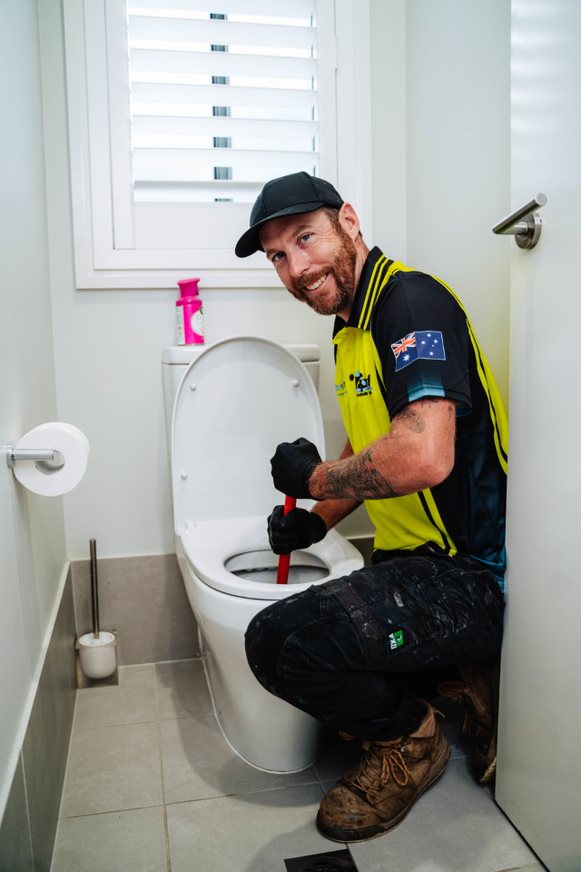
Some small rocking problems can be safely improved at home—especially if there’s no leak and the wobble is mild. But it’s important to know where DIY ends.
A) Gently check the base bolts (without cracking the toilet)
Remove the bolt caps at the base. Use a hand tool (not a power tool) and turn a little at a time, alternating sides.
Safe tightening method:
- tighten ¼ turn on one side
- tighten ¼ turn on the other
- repeat until snug
- stop the moment the rocking reduces and resistance increases
What to avoid:
- cranking down hard (can crack porcelain)
- tightening only one side (can tilt the pan)
- continuing to tighten if rocking doesn’t improve quickly (means the cause is likely uneven floor/flange)
If tightening doesn’t help, don’t force it. That’s usually when we recommend a reset and inspection.
B) Use proper toilet shims the right way
Toilet shims are designed for stabilising. They’re common and totally acceptable—when used correctly.
How it should work:
- find the rocking direction
- insert a shim at the low point (the side that lifts)
- use as few as needed
- don’t wedge so hard that the toilet twists
- trim the shim so it’s hidden
Avoid:
- cardboard (absorbs water and compresses)
- timber scraps (can rot and swell)
- stacking random materials (creates uneven pressure)
Plumbers shim in a way that prevents stress and keeps the base evenly supported.
C) Seal only after it’s stable (for hygiene, not strength)
Sealing the base helps keep grime and mop water from getting under the toilet. But sealing should be a finishing step—after stabilising.
If your toilet rocks and you seal it anyway, the movement can tear the silicone and trap moisture underneath.
A professional plumber seals neatly and checks for leaks first.
How plumbers stabilise a rocking toilet (the professional method)
When Local Quaker Hills Plumber stabilises a toilet, we do more than stop the wobble. We make sure the toilet is:
- stable
- correctly sealed
- safe from leaks and odours
- connected properly to the drain
- not masking bigger plumbing issues (like blockages)
Here’s how it’s usually handled.
Step 1: Diagnose the true cause (floor vs flange vs fixing)
We test:
- where the toilet rocks and how much
- whether the bolts are uneven or stripped
- whether the base contacts the floor evenly
- whether the flange is too high/low
- signs of leakage or sewer gas escape
If there are signs of blockage or slow drainage, we may recommend a drain camera inspection to ensure you’re not dealing with deeper sewer issues too.
Step 2: Check the flange and the seal (this is where problems hide)
We inspect the drain connection because that’s where leaks start. If the seal is compromised, stabilising alone isn’t enough—resetting is the correct solution.
If needed, we:
- replace the seal correctly
- ensure the flange is secure and at the correct height
- confirm the toilet is centred and seated properly
Step 3: Reset the toilet if required (clean, level, reinstall)
A proper reset typically involves:
- lifting the toilet
- cleaning old silicone and debris
- checking for moisture damage
- reinstalling with a fresh seal
- setting the toilet squarely and evenly
This is also the best time to check nearby plumbing like:
- inlet connections
- shut-off valves
- cistern fittings
- signs of hidden leaks behind the toilet
We can also perform general plumbing inspections and testing to make sure everything in the bathroom zone is healthy—especially in older homes.
Step 4: Shim and level professionally (for long-term stability)
If the floor is uneven, we shim correctly:
- minimal shims
- correct placement
- no twisting pressure
- trimmed and finished neatly
This prevents future loosening and avoids stress cracks.
Step 5: Final tightening, sealing, and leak testing
We tighten bolts carefully, then:
- test flush multiple times
- check for base seepage
- confirm stability under gentle load
- finish with clean sealing if required
If we suspect drain issues, we can also offer:
- blocked drain clearing
- water jetting
- drain/sewer cleaning
- tree root removal
- CCTV inspections to confirm the line is clear
This is especially useful when customers call us because the toilet both rocks and doesn’t flush properly.
Special cases that often require a plumber (don’t risk it)
Call a plumber if:
- there’s water around the base
- you smell sewer gas
- the rocking is noticeable (not minor)
- bolts are spinning/stripped or won’t tighten
- the toilet is new but has never felt stable
- the floor feels soft, bouncy, or damaged
- flushing is weak or drains are slow (possible blockage)
In these cases, the correct fix is usually a professional reset plus inspection—done once, done right.
How this connects to residential plumbing in penrith (local context)
In residential plumbing in penrith, rocking toilets often show up after:
- quick bathroom refreshes where tiling changed floor height
- toilet replacements where old silicone wasn’t cleaned properly
- older homes with slight subfloor movement
- DIY installs where bolts were tightened unevenly or over-tightened
What makes it tricky is that a rocking toilet can hide other plumbing concerns too—like a partial blockage or poor venting. That’s why we approach it as part of the bigger plumbing picture, not just “stop the wobble.”
And if you’re in Quakers Hill or around Penrith and you’ve got multiple symptoms (rocking + smell + slow drain), we can handle it end-to-end with our full service range.
FAQs (expanded, plain-English answers)
Why does my brand-new toilet rock?
Because the base isn’t supported evenly. Usually it’s an uneven tile surface, leftover debris under the base, or a flange height issue after tiling. It can also happen if bolts were tightened unevenly.
Is it okay to keep using a rocking toilet?
If it’s rocking, you’re increasing the risk of seal failure. If there’s any moisture or smell, stop using it and get it fixed quickly.
Can I fix it with silicone?
No—silicone isn’t a structural fix. It may hide the symptom briefly, but the movement continues underneath and can lead to trapped moisture and leaks.
Do I need a plumber to re-seat the toilet?
If the seal is compromised, yes. Re-seating involves lifting the toilet and installing a fresh seal correctly. Done wrong, it can leak or smell.
Could rocking be related to blocked drains?
Not directly, but they can happen together. If your toilet rocks and also flushes poorly, gurgles, or drains slowly, you may have a developing blockage. That’s when CCTV inspections and water jetting help.
How Local Quaker Hills Plumber can help you today
If your new toilet keeps rocking, don’t settle for a temporary patch. We’ll stabilise it properly, check for hidden leaks, and make sure your bathroom is safe, sealed, and stress-free.
Local Quaker Hills Plumber provides complete solutions for toilet problems and the plumbing issues that can come with them:
- Toilet repairs and installations (including resets, seal replacements, bolt repairs, stabilising, and leak checks)
- General plumbing repairs and installations (taps, toilets, showers, inspections and testing)
- 24/7 emergency plumbing (urgent leaks, overflowing toilets, sewer problems—anytime)
- Leak detection (water leaks, shower leaks, pool leaks, and gas leak detection)
- Blocked drain clearing and repairs (water jetting, drain/sewer cleaning, CCTV camera inspections, tree root removal)
- Hot water systems (supply, installation, servicing, and repairs: gas, electric, instant, heat pump, solar, and commercial)
- Gas fitting and gas plumbing (appliance installs, repairs, and gas leak detection)
- Water filtration solutions (cleaner, better-tasting water for your home)
For fast help in Quakers Hill and the surrounding area—especially for residential plumbing in penrith—call Local Quaker Hills Plumber on 291583597.
We’ll make your toilet rock-solid again, confirm it’s sealed correctly, and help you avoid the leaks and floor damage that wobbling toilets can cause.