Toilet Repairs Plumber Quakers Hill: Cistern, Flush Valve and Seal Problems Explained
| Quick answer: Most toilet faults come down to three parts: the cistern’s inlet valve, the flush valve (outlet valve), and the rubber seals between the cistern, pan, and floor. A constantly running toilet usually means a worn flush valve washer or a faulty inlet valve, while water pooling at the base points to a failed pan seal. A licensed toilet repairs plumber in Quakers Hill can diagnose which part has failed and repair or replace it, often in a single visit. For fast help, call Local Quakers Hill Plumber on 02 9158 3597, available 24/7. |
Table of Contents
- How Your Toilet Actually Works
- Cistern Problems: Running Water, Slow Filling and Hissing
- Flush Valve Faults: Weak Flushes and Phantom Refills
- Seal Problems: Leaks at the Base, Wall and Cistern
- Repair or Replace? How to Decide
- When to Call a Toilet Repairs Plumber in Quakers Hill
- Frequently Asked Questions
A toilet that runs all night, refuses to flush properly, or leaves a mystery puddle on the bathroom floor is one of those problems that never fixes itself. It usually gets worse, and it quietly drives up your water bill while it does. The frustrating part is that most homeowners in Quakers Hill have no idea whether the fix is a two-dollar washer or a full toilet replacement.
The good news: nearly every toilet fault traces back to one of three areas. The cistern and its inlet valve, the flush valve that releases water into the pan, or the seals that keep everything watertight. Once you understand which symptom points to which part, you can talk to a toilet repairs plumber in Quakers Hill with confidence and avoid paying for work you do not need.
This guide walks through each of those three problem areas, the warning signs for each, what you can safely check yourself, and when it is time to hand the job to a licensed plumber.
| Just starting to troubleshoot? Local Quakers Hill Plumber covers toilet repairs as part of its general plumbing services in Quakers Hill. Have a browse to see what a typical repair visit covers before you decide anything. |
How Your Toilet Actually Works

Understanding the basics makes every fault easier to spot. A standard Australian toilet has two main assemblies.
The cistern is the tank that stores water for the next flush. Inside it, an inlet valve (also called a fill valve) opens when the water level drops and closes when a float tells it the cistern is full. When you press the button, the flush valve (the outlet valve at the bottom of the cistern) lifts and releases the stored water down into the pan.
The pan is the bowl itself. It connects to the drainage system through a pan collar or pan seal, a rubber connector that keeps waste water and sewer gases where they belong. Between the cistern and the pan sits another seal, often a large doughnut-shaped washer, that stops water escaping during a flush.
Three parts, three failure points. Almost every toilet complaint you will ever have lives in one of them.
Cistern Problems: Running Water, Slow Filling and Hissing
The cistern’s inlet valve does a lot of work over its lifetime, and it is usually the first component to wear out.
The toilet keeps running or trickling
If you can hear water constantly trickling into the pan, one of two things is happening. Either the flush valve washer is not sealing (covered in the next section), or the inlet valve is overfilling the cistern so that water escapes through the overflow. Take the lid off the cistern and look: if the water level sits at or above the overflow pipe, the inlet valve or its float is the culprit.
The cistern fills slowly or not at all
A cistern that takes several minutes to refill often has a partially blocked inlet valve. Debris and mineral scale from the water supply can clog the small opening inside the valve. In many cases a plumber can clean or rebuild the valve; if it is an older unit, replacing it outright is usually the more reliable fix.
Hissing or groaning noises
A hissing sound after the flush cycle finishes usually means the inlet valve is not closing fully, so water keeps forcing its way past the worn seal under pressure. Groaning or hammering noises when the cistern refills can indicate a failing valve diaphragm. Neither noise is dangerous on its own, but both mean the valve is on its way out.
A constantly running cistern can waste a surprising amount of water over a quarter, so it pays to deal with it early rather than waiting for the bill to arrive.
Flush Valve Faults: Weak Flushes and Phantom Refills
The flush valve takes a beating every single time the toilet is used, and its rubber washer hardens and distorts with age.
Weak or incomplete flushes
If the flush starts strong then dies away, or you need to hold the button down to get a full flush, the flush valve mechanism may not be lifting properly or may be dropping closed too early. Sometimes the fix is a simple adjustment of the button linkage; other times the whole outlet valve assembly needs replacing.
Keep in mind that a weak flush can also be a drainage symptom rather than a cistern one. If the water rises in the pan before draining slowly, the problem may be a partial blockage in the pipe rather than the toilet itself. That is a job for a blocked drain specialist in Quakers Hill, who can clear the line with a drain snake or water jetter before the blockage becomes a full backup.
Phantom refills
Does your cistern briefly refill on its own every hour or so, even though nobody has flushed? That is the classic sign of a slow leak past the flush valve washer. Water seeps from the cistern into the pan, the level drops, and the inlet valve tops it back up. A simple test: put a few drops of food colouring in the cistern and wait twenty minutes without flushing. If colour appears in the pan, the flush valve washer has failed.
Buttons that stick or do nothing
Dual-flush buttons rely on small plastic linkages that wear and snap. A button that has to be pressed several times, sticks down, or feels loose usually means the flush mechanism is failing internally. Replacement mechanisms are inexpensive, but matching the right unit to your cistern model matters, which is where an experienced plumber saves you a second trip to the hardware store.
| Comparing your options? If your toilet is showing more than one of these symptoms, it may be time for a professional assessment rather than another DIY part swap. Request a free, upfront quote from Local Quakers Hill Plumber and find out exactly what the repair involves before any work starts. Toilet and tap repairs start from $55. |
Seal Problems: Leaks at the Base, Wall and Cistern
Seal failures are the sneakiest of the three problem areas because the damage often happens out of sight before you notice anything.
Water pooling at the base of the toilet
Water around the base of the pan is never normal. In many cases it points to a failed pan collar, the rubber seal connecting the toilet outlet to the drain pipe. Every flush pushes a little water past the failed seal and onto (or under) the floor. Left alone, this can damage flooring, rot subfloor timber, and let sewer odours into the bathroom. This is one repair you should never postpone.
Leaks between the cistern and the pan
If water dribbles down the back of the pan during or after a flush, the seal between the cistern and pan has likely perished. On close-coupled toilets this is a doughnut washer that compresses between the two pieces of porcelain. Replacing it means removing the cistern, which is straightforward for a plumber but awkward and easy to get wrong as a DIY job, especially with older brittle porcelain.
Leaks where the cistern meets the wall or the water supply
The small braided hose and tap connecting your cistern to the water supply have their own washers and O-rings. A slow drip here often shows up as corrosion or white mineral tracks on the connection. It is a quick fix, but because it involves the pressurised water supply rather than stored cistern water, a slow drip can become a fast leak without warning. If a supply connection ever bursts, turn off the tap at the toilet (or the water meter) and call an emergency 24/7 plumber in Quakers Hill straight away.
The smell test
A persistent drain smell in the bathroom, even when everything looks dry, can indicate a failing pan seal letting sewer gas escape. Do not mask it with air freshener; get the seal inspected.
Repair or Replace? How to Decide
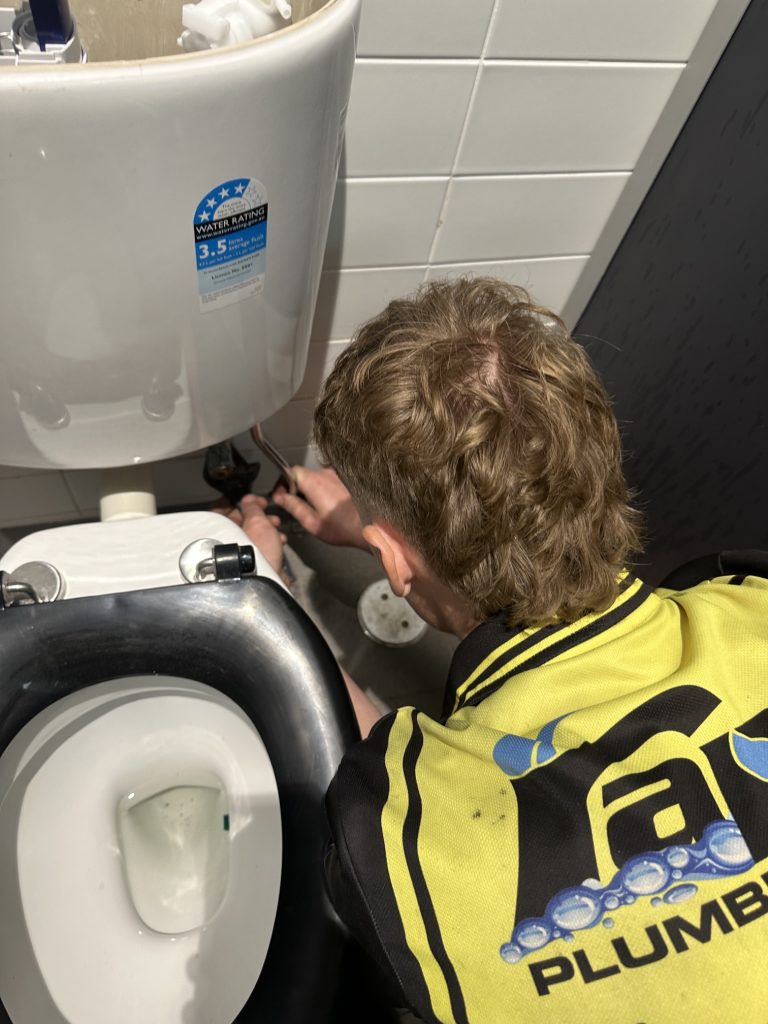
Most cistern and valve faults are genuinely repairable, and repairing is usually the cheaper path. That said, there are times when replacement makes better financial sense:
- Repeat failures. If you have replaced the inlet valve, then the flush valve, then a seal, all within a couple of years, the toilet is telling you something.
- Cracked porcelain. Hairline cracks in a cistern or pan cannot be reliably repaired and can fail suddenly.
- Discontinued parts. Some older cistern models no longer have matching mechanisms available, which turns a small repair into a workaround.
- Single-flush units. Older single-flush toilets use far more water per flush than a modern dual-flush model, so an upgrade can help reduce ongoing water use.
A good plumber will lay out both options with honest pricing rather than pushing the bigger job. That is the approach the family owned team at Local Quakers Hill Plumber takes: free quotes, upfront per-job pricing, and recommendations based on what your toilet actually needs.
When to Call a Toilet Repairs Plumber in Quakers Hill
Some checks are safe and sensible to do yourself: the food colouring test, looking at the cistern water level, and tightening a slightly loose seat. Beyond that, the risk-to-savings ratio changes quickly. Call a licensed toilet repairs plumber in Quakers Hill when:
- Water is pooling at the base of the toilet or you can smell drains in the bathroom.
- The toilet runs constantly and adjusting the float has not fixed it.
- The cistern needs to come off, for example to replace the cistern-to-pan seal.
- The fault involves the pressurised water supply connection.
- The toilet is your only one and you cannot afford a botched repair leaving it out of action.
- Flushing causes water to rise in the pan, which suggests a drain blockage rather than a toilet fault.
In NSW, plumbing work is regulated for good reason. Work on drainage and water supply generally needs to be carried out by a licensed plumber, and DIY mistakes on these systems can end up costing far more than the original repair. Local Quakers Hill Plumber services the whole Quakers Hill area with same-day service, fully insured and licensed tradespeople, and a full range of plumbing services beyond toilets, from hot water to gas fitting.
Key takeaways
- Almost all toilet faults come from the inlet valve, the flush valve, or a seal.
- Constant running plus a high cistern water level points to the inlet valve; phantom refills point to the flush valve washer.
- Water at the base of the toilet or a drain smell means a seal problem, and it should be fixed promptly to protect your floor.
- The food colouring test is a safe DIY way to confirm a flush valve leak.
- Repair is usually cheaper, but repeat failures, cracks, or an old single-flush unit can make replacement the smarter call.
- Anything involving the drain connection or pressurised supply belongs with a licensed plumber.
| Ready to get it fixed? Local Quakers Hill Plumber offers same-day toilet repairs across Quakers Hill with upfront pricing and no call-out surprises. Available 24/7 for emergencies. Call 02 9158 3597 now or book a service call online and have a licensed local plumber at your door fast. |
Frequently Asked Questions
Why does my toilet keep running after I flush?
The two usual causes are a worn flush valve washer letting water seep from the cistern into the pan, or an inlet valve that overfills the cistern so water escapes down the overflow. Check the cistern water level first: if it sits above the overflow pipe, the inlet valve is the problem. If the level is normal but water still trickles into the pan, the flush valve washer has likely failed.
How do I know if my toilet seal is leaking?
Look for water pooling around the base of the pan, damp or lifting flooring near the toilet, water dribbling down the back of the pan after a flush, or a persistent drain smell in the bathroom. Any of these signs suggests a perished pan seal or cistern seal that should be inspected by a plumber promptly, since ongoing leaks can damage the floor beneath the toilet.
Can I replace a toilet inlet valve myself?
Swapping a like-for-like inlet valve inside the cistern is within reach for a confident DIYer, since it does not involve the drainage system. That said, you still need to isolate the water supply, choose a compatible valve, and set the fill level correctly. If the fault turns out to involve the supply connection, the flush mechanism, or a seal, it is safer and often cheaper overall to have a licensed plumber handle it in one visit.
How much does toilet repair cost in Quakers Hill?
Costs depend on which part has failed and whether it can be repaired or needs replacing. Local Quakers Hill Plumber charges by the job rather than the hour, with tap and toilet work starting from $55, and always provides a free quote before starting so you know the full price upfront. Call 02 9158 3597 for a quote on your specific fault.
Is a leaking toilet an emergency?
A slow internal leak from cistern to pan wastes water but is not urgent in the same way. A leak from the pressurised supply connection, water spreading across the floor, or sewage backing up into the pan should be treated as urgent. Turn off the toilet’s isolation tap if you can, and call an emergency plumber. Local Quakers Hill Plumber is available 24/7 for exactly these situations.
Why does my toilet flush weakly?
A weak flush can come from the cistern side or the drain side. If the cistern is not filling to the correct level or the flush valve closes too early, the pan does not get enough water. If the water rises in the pan and drains slowly, a partial blockage in the drain is more likely, and clearing the line is the real fix rather than adjusting the toilet.