Stormwater Drain Smells Like Sewer: When the Systems Are Cross-Connected
Quick answer: what that smell usually means
If your stormwater drain smells like sewer, it’s not something to ignore—because stormwater and sewer should never mix. In plain terms, that smell usually means one of three things:
- There’s sewage getting into stormwater (a cross-connection or leak).
- Your sewer line is blocked or damaged, and the smell is escaping through nearby pits, grates, or ground.
- Your stormwater pit is full of rotting organic gunk (leaves, dirt, sludge) that smells like sewer even though it isn’t.
In Penrith and surrounding suburbs, we see this more often after:
- bathroom/kitchen/laundry renovations,
- older homes with mixed drainage histories,
- storm seasons where heavy rain exposes weak points,
- tree-heavy blocks where roots invade pipes.
If the smell is strong, constant, or worse when you flush—treat it like a plumbing fault until proven otherwise. For residential plumbing in Penrith, acting early is the easiest way to avoid a wet, smelly, expensive emergency.
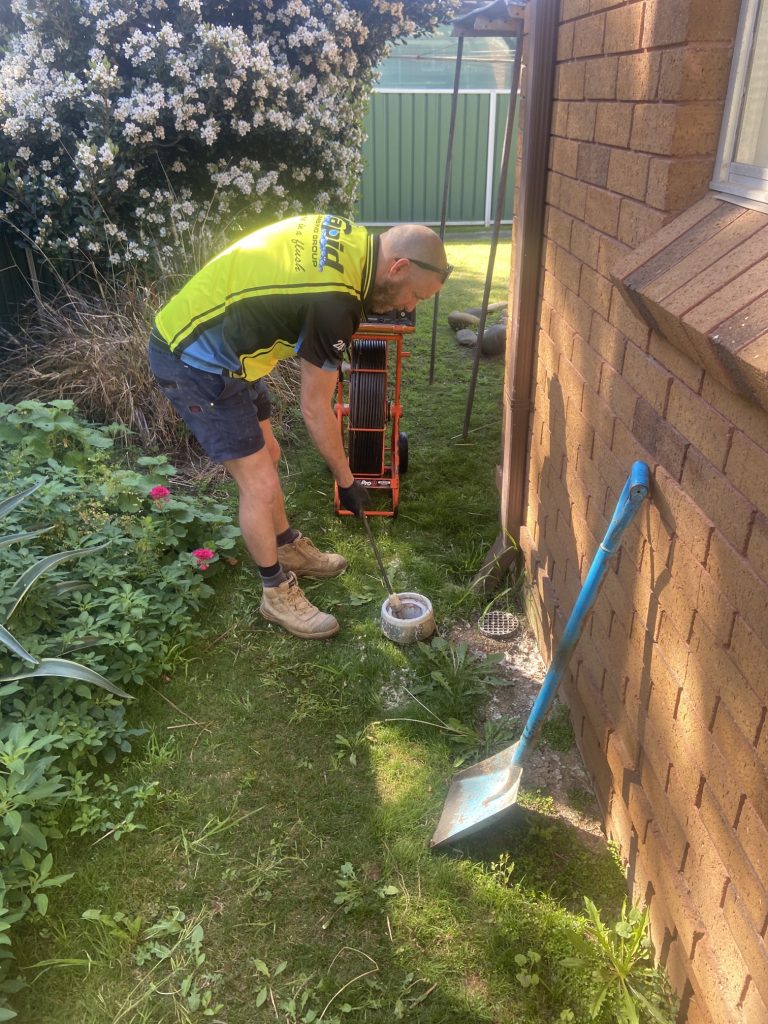
What we do (Local Quaker Hills Plumber): we don’t guess. We diagnose properly using CCTV camera inspections, smoke testing, dye testing, and if needed, high-pressure water jetting to clear blockages fast.
Stormwater vs sewer: two systems that should never meet
A lot of people assume “a drain is a drain.” But in Australian homes, stormwater and sewer are two different worlds.
Stormwater (rainwater)
Stormwater is meant to handle rainwater only:
- Roof gutters and downpipes
- Yard grates and stormwater pits
- Driveway trench drains
- Surface water collection points
Stormwater typically flows out to street drainage and then to waterways. That’s why stormwater systems are not designed to carry human waste or greasy wastewater.
Related service we provide:
✅ Stormwater pit cleaning and flushing – removal of leaf sludge and sediment that causes stink and slow flow.
✅ Downpipe and stormwater line inspections – checking for broken joints, silt build-up, and blockages.
✅ Drain cleaning (water jetting) – for stormwater lines that are choked with mud or debris.
Sewer (wastewater)
Sewer is meant to carry wastewater from inside the home:
- Toilets
- Showers, basins, baths
- Kitchen sinks and dishwashers
- Laundry tubs and washing machines
- Floor wastes in bathrooms/laundries
Sewer lines are sealed systems connected to the sewer network and treatment plants.
Related service we provide:
✅ Blocked sewer clearing – high-pressure water jetting + root removal.
✅ CCTV sewer camera inspections – to see cracks, tree roots, sags, and illegal junctions.
✅ Sewer repairs and relining – where suitable, to fix damage with minimal digging.
When these two systems cross-connect, you get smells—and bigger risks.
Common reasons a stormwater drain smells like sewer
Let’s break down the most common real-world causes, what they look like, and how we fix them in the field.
1) Sewer is cross-connected into stormwater (the biggest red flag)
This is the one we take most seriously. A cross-connection means part of your wastewater plumbing is accidentally draining into stormwater. This can happen when:
- a renovation plumber tied the wrong pipe into the wrong line,
- old work was done “cheap and fast,”
- there were undocumented changes over decades.
Typical signs:
- Smell is strongest near a stormwater grate or pit even on dry days
- The pit has grey/black water (not just rainwater)
- The smell spikes after flushing, showering, or doing laundry
- You might even spot greasy residue or suspicious solids
How we confirm it:
- Dye testing: we run dye through toilets/sinks and check stormwater pits.
- Smoke testing: smoke reveals hidden pipe links and broken seals.
- CCTV camera inspection: we visually trace which line goes where.
How we fix it (real services):
✅ Drain reconfiguration / reconnection – remove the illegal or incorrect connection and reroute correctly.
✅ New pipe runs or junction repairs – done to correct levels and flows.
✅ Final verification testing – we re-test after repairs so you’re not left “hoping.”
This is one of the main reasons homeowners call Local Quaker Hills Plumber for residential plumbing in Penrith—it’s not just a smell, it’s a system fault.
2) Stormwater is connected into sewer (can still cause sewer smells)
This is the reverse mistake: roof water or yard drains dump into the sewer line. You might think “water is water,” but this can overload sewers during rain.
What happens during storms:
- The sewer line fills too quickly
- Pressure increases
- Odours can push out of vents, gully traps, and low points
- In worst cases, sewage backs up into bathrooms
Common clues:
- Smell is worse after heavy rain
- Toilets gurgle during downpours
- Drains run slow only in wet weather
How we diagnose and fix it:
✅ CCTV inspection to identify illegal stormwater entry points.
✅ Downpipe tracing to confirm where roof water is going.
✅ Disconnection and reconnection so stormwater returns to stormwater lines.
✅ Sewer jetting if the overload has pushed debris into the line and created a blockage.
3) A blocked sewer line is overflowing near stormwater infrastructure
Sometimes there is no direct cross-connection. Instead, your sewer line is blocked, and wastewater is escaping underground—then stormwater pits “vent” the smell.
Typical causes of sewer blockages:
- Tree roots (very common in older Penrith blocks)
- Grease and food waste from kitchen sinks
- Wet wipes and sanitary products
- Cracked pipes that catch debris and form a dam
Signs you’ll notice:
- Multiple drains are slow
- Toilet bubbles when you run taps
- Bad smell appears outside near pits or grates
- Sometimes there’s a “sour sewer gas” smell that comes and goes
What we do (real services):
✅ Emergency blocked drain clearing (24/7)
✅ High-pressure water jetting to clear the obstruction
✅ Tree root removal to prevent repeat blockages
✅ CCTV camera inspection after jetting to identify pipe condition
✅ Drain/sewer repairs if we find breaks, offsets, or collapses
4) Broken sewer pipe leaking into soil near stormwater lines
A sewer pipe can crack from:
- soil movement,
- tree roots forcing joints apart,
- older brittle pipes,
- heavy vehicle loads near buried lines.
When sewage leaks into soil, stormwater pits and grates can act like “chimneys” for the smell.
Clues:
- Smell is persistent and worse in warm weather
- You may see soggy ground, greener grass, or subsidence
- The smell isn’t clearly tied to rain or flushing
How we diagnose and fix it:
✅ CCTV inspection to locate cracks and offsets
✅ Leak detection support where needed to narrow down the area
✅ Pipe relining (when suitable) to seal cracks without major digging
✅ Pipe replacement when damage is severe or the line has collapsed
5) Gully trap or venting problems
If gully traps, vents, or seals are wrong, sewer gases escape outdoors and drift toward stormwater drains.
How it happens:
- Vents were blocked, removed, or capped incorrectly
- A renovation changed airflow and traps siphon dry
- Gully trap is damaged or incorrectly placed
Signs:
- Smell is around the side of the home
- Worse at certain times of day (wind changes)
- Doesn’t always match rain or flushing patterns
What we do (real services):
✅ Plumbing inspections and testing
✅ Repairs to vents and traps
✅ Seal replacements and correct venting setup
✅ Smoke testing to identify gas escape points
6) “Not sewer” smells: stagnant stormwater pits and organic sludge
This is the “gross but fixable” one. Stormwater pits collect:
- leaves,
- bark,
- sand and silt,
- garden mulch,
- road debris.
Over time it rots and stinks—especially in heat.
Clues:
- The smell is worst in summer
- The pit water is brown and stagnant
- There are no indoor drain issues
What we do (real services):
✅ Stormwater pit cleaning (debris removal)
✅ Drain flushing to restore flow
✅ Water jetting for stormwater lines choked with mud
✅ Advice on leaf guards and maintenance to prevent repeat build-up
7) Nearby infrastructure problems (less common, still possible)
Sometimes sewer smells come from outside your property:
- council drainage issues,
- nearby sewer works,
- overflow incidents in the street system.
If the smell is strongest at street pits, we can help you identify whether it’s your private line or something external.
What we do:
✅ CCTV inspections on private property lines to confirm your system is sound
✅ Clear documentation you can share if a council or authority needs evidence
Fast field check: is it likely a cross-connection? (safe homeowner steps)

You can do a basic “pattern check” without touching anything dangerous.
Step A: Time the smell
- Does it get worse after someone flushes?
- Does it spike after laundry runs?
- Is it strongest after rain?
Step B: Check for indoor symptoms
- slow drains,
- gurgling sounds,
- toilet water rising or bubbling.
Step C: Look (don’t touch)
If safe, look into the stormwater pit from above:
- Is water grey/black?
- Is there greasy scum?
- Anything that looks like toilet paper?
If yes to those—book a plumber. Cross-connections aren’t “wait and see” issues.
Why this matters: health, property damage, and waterways
A cross-connection isn’t just a smell problem.
Health risk
Sewage can contain harmful germs. Kids and pets are most at risk because they’re near the ground and touch surfaces.
Property risk
If sewer problems escalate, you can end up with:
- backflow into showers and floor wastes,
- water damage,
- damaged pipework that needs costly replacement.
Environmental risk
Stormwater often ends up in creeks and rivers. That’s why cross-connections and illicit discharges are treated seriously.
What to do right now (simple, safe steps)
- Keep kids and pets away from the smelly grate/pit
- Reduce water use in the house until you know what it is
- Avoid drain chemicals (they don’t fix cross-connections and can damage pipes)
- Take photos/video of the pit and surrounding area
- Call a licensed plumber to test and confirm the cause
If you suspect sewer involvement and the smell is strong, we recommend treating it as urgent.
How we confirm the cause (the “no guesswork” method)
At Local Quaker Hills Plumber, our process for Penrith homes and businesses looks like this:
1) On-site inspection
We map:
- where the smell starts,
- how it changes with water use,
- any indoor symptoms.
2) CCTV drain camera inspection
We inspect stormwater and sewer lines to find:
- illegal junctions,
- cracks and offsets,
- blockages and root intrusion,
- sags that hold stagnant water.
3) Smoke testing
Smoke reveals:
- wrong connections,
- broken seals,
- venting issues.
4) Dye testing
This gives clear proof of where water is flowing.
5) Clear recommendations + quote
We explain:
- what’s wrong,
- what fixes are available,
- which option gives the best long-term result.
Fix options (from simplest to most involved)
Blockage clearing (fastest fix when pipes are intact)
✅ High-pressure water jetting
✅ Root cutting/removal
✅ Drain cleaning and flow restoration
✅ Optional preventative maintenance plans for repeat offenders
Repairing damaged pipes
✅ Pipe relining where suitable (less digging)
✅ Excavation and replacement for collapsed or severely damaged sections
✅ Regrading / correcting fall if sagging pipes cause pooling
Correcting cross-connections
✅ Disconnect and re-plumb incorrect lines
✅ Reconnect to correct sewer/stormwater points
✅ Retest with dye/smoke/CCTV for confirmation
✅ Provide documentation so you know it’s fixed properly
Prevention tips (especially after renovations)
- Use licensed plumbers for drainage work
- Ask for line tracing after renovations
- Keep stormwater pits clear of leaf litter
- Don’t flush wipes
- Don’t pour grease down drains
- If you have large trees, book periodic CCTV checks
FAQs (AEO-friendly)
Why does my stormwater drain smell like sewage when it hasn’t rained?
It may be a cross-connection, a cracked sewer pipe nearby, or a sewer blockage venting smells through stormwater pits.
Can I fix it myself with bleach or drain cleaner?
No—chemicals don’t fix cross-connections or broken pipes. They can also damage plumbing and create fumes.
What’s the fastest way to confirm a cross-connection?
Dye testing + CCTV inspection is usually the quickest and clearest.
Is it urgent?
If the smell worsens when you flush, or there’s grey/black water in a stormwater pit, treat it as urgent.
Call Local Quaker Hills Plumber (Penrith): we’ll find the cause and fix it properly
A stormwater drain that smells like sewer is your home’s way of saying: something is connected wrong, blocked, or leaking. The sooner it’s tested, the easier (and cheaper) the fix usually is.
Local Quaker Hills Plumber provides complete drainage and plumbing support for residential plumbing in Penrith, including:
- 24/7 emergency plumbing
- Blocked drains (stormwater and sewer)
- High-pressure water jetting
- CCTV drain and sewer camera inspections
- Tree root removal
- Drain and sewer repairs / relining
- General plumbing repairs (taps, toilets, showers)
- Inspections and testing
- Leak detection (water, shower, pool, gas)
- Gas fitting (installs, repairs, gas leak detection)
- Hot water systems (gas, electric, instant, heat pump, solar)
- Water filtration solutions
📞 Call now: 291583597
If you’re smelling sewer at a stormwater drain, we’ll inspect, test, explain it clearly, and repair it the right way—so your plumbing stays safe, compliant, and reliable.