Leaking Pipe Under the Sink: Why It Happens and How to Prevent Repeat Leaks
What a leaking pipe under the sink usually means (and why it keeps coming back)
A leaking pipe under the sink is one of those problems that looks small… until it isn’t. In a lot of Penrith homes, it starts as a light drip you only notice when you grab dish soap and feel the cabinet base is damp. But because the leak is hidden behind stored items, it can keep dripping for days or weeks before anyone sees it. That’s how “just a drip” turns into swollen cupboards, peeling laminate, musty smells, mould, and even ants and cockroaches moving in because there’s constant moisture.
What makes under-sink leaks frustrating is that many people stop the symptom (the drip) but not the cause. A quick tighten might reduce the leak, but it doesn’t always fix the reason it began—like a flattened washer, a hairline crack in the trap, or pipes that are slightly misaligned and constantly under tension.
In our work providing residential plumbing in Penrith, we see repeat leaks most often when:
- A seal is already worn out, and tightening only squashes it further
- Plastic fittings were overtightened in the past and are now cracked
- DIY pipework is forcing angles that don’t naturally line up
- Blocked drain pressure is pushing water out at weak points
- Old flexible hoses are near the end of their lifespan
The good news is that most under-sink leaks are preventable when you know what to look for, and when repairs are done properly—not just patched.
Quick safety check before you touch anything
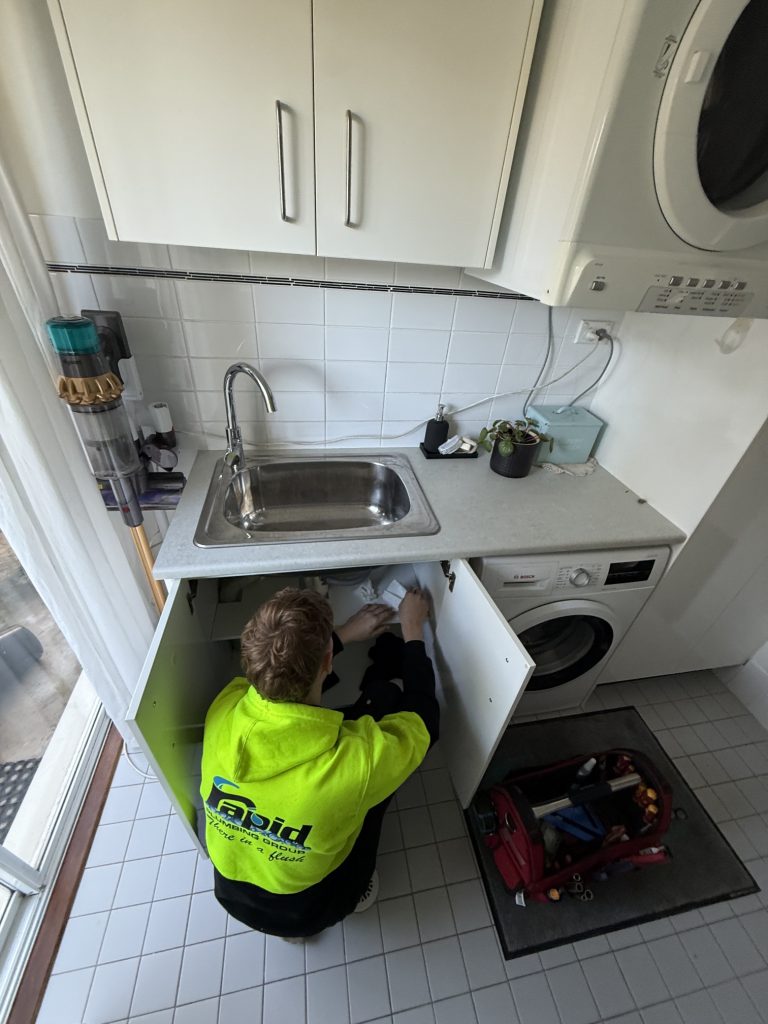
Before you put your hands under the sink, do a fast safety routine. This keeps things clean, prevents damage, and avoids making the leak worse.
- Empty the cupboard completely.
You need clear access so you can see exactly where water is coming from. Also, wet cleaning products and cardboard packaging can create a mess and hide the leak source. - Protect the area.
Place a bucket under the pipes and lay down an old towel. If the cabinet base is already wet, dry it so you can track fresh water. - Turn off the water safely.
- If the leak is on the hot or cold supply line, use the isolation valves under the sink (turn clockwise).
- If isolation valves don’t work or aren’t installed, shut off the main water supply to the home.
- Avoid touching electrical points.
Many kitchens have a dishwasher plug or under-sink power point. If water is near electrical wiring, don’t keep “testing” the leak—switch off power at the board and call a professional. - If the leak seems linked to a blocked drain, don’t keep flushing it.
A partial blockage can cause water to back up and escape at joints. If you keep running water, you may flood the cabinet base.
If it’s a serious leak and you can’t stop it quickly, our team offers 24/7 emergency plumbing support, and we can also handle related issues like blocked drain clearing (water jetting, camera inspections, and drain/sewer cleaning) if the leak is being caused or worsened by drainage problems.
The main parts under your sink (simple explanation)
Knowing what’s under the sink makes it easier to describe the problem and avoid guessing.
- Tap supply lines (hot and cold): These bring clean water to your tap. In many homes, they are flexible braided hoses. They can leak at the ends where they connect to the valve or tap.
- Isolation valves: Small shut-off valves under the sink. If these are old, they can also start leaking around the spindle when you turn them.
- Waste pipe (drain line): This carries used water away.
- Trap (P-trap or S-trap): The curved section that holds a small amount of water to stop sewer smells. Traps are common leak points because they have multiple joins.
- Slip nuts and compression fittings: The plastic or metal nuts that hold sections together.
- Washers and O-rings: Rubber seals inside the fittings that actually stop the water from escaping.
When we do under-sink repairs as part of residential plumbing in Penrith, we don’t just replace what’s wet. We check the whole set-up, including the trap alignment, the condition of seals, and whether the leak is linked to bigger issues like blocked drains or water pressure.
Common causes of leaking pipes under the sink (and what they look like)
1) Loose slip nuts on the trap or waste pipe
What you’ll see: Drips around the trap joins, usually when the sink is draining. You might notice it most after washing dishes.
Why it happens: Slip nuts can loosen from vibration, small knocks from stored items, or installation that wasn’t properly aligned. Even a slight twist can break the seal.
Why it repeats: Tightening might help for a short time, but if the washer is worn or the pipe is under tension, it will leak again.
How we fix it properly: We inspect the trap parts, replace worn washers, and re-align the trap so it sits naturally. If a trap is cracked or cheap quality, we replace it with a better fitting and test it under flow.
If the reason the trap is leaking is because water is backing up, we may recommend a drain camera inspection and water jetting to clear the cause of the pressure.
2) Worn or damaged washers and O-rings
What you’ll see: A slow drip at a connection that looks “tight enough.” Sometimes the cabinet base is damp but you can’t spot an obvious stream.
Why it happens: Washers age, flatten, harden, or crack. Hot water and daily use speed this up.
Why it repeats: People overtighten the nut, which can deform the washer further or crack plastic fittings.
How we fix it properly: We replace the correct washer/O-ring (size matters), check the seat surfaces for damage, and reassemble the connection properly. We also make sure the pipe isn’t pulling sideways, because even a new washer can fail if the fitting is stressed.
3) Cracked plastic trap or fittings
What you’ll see: Moisture along the pipe body, tiny hairline cracks, or a drip that doesn’t come from a join.
Why it happens: Plastic fittings can crack from:
- overtightening
- impact (bumping it with storage items)
- harsh drain chemicals
- age and heat exposure
Why it repeats: Sealant and tape won’t hold long if the plastic is cracked.
How we fix it properly: Replacement is usually the right fix. We also look at what caused the crack—like overtightened connections or a partial blockage—so the new part doesn’t fail again. If the home has recurring drain issues, we can do drain/sewer cleaning, tree root removal (if it’s an outdoor drain problem), and CCTV camera inspections to prevent future pressure and leaks.
4) Corroded metal pipes (older homes)
What you’ll see: Rust, green stains, pitting, or weeping moisture. Sometimes the pipe looks “sweaty.”
Why it happens: Older metal pipes corrode over time, especially if there are mixed metals joined incorrectly.
Why it repeats: Corrosion spreads. Fixing one small leak doesn’t stop other weak points.
How we fix it properly: We replace damaged sections with appropriate modern materials and ensure the connections are correct. We also test for other weak points nearby. If the corrosion is linked to poor water quality, we can discuss water filtration solutions to improve household water use (especially for drinking, cooking, and appliance longevity).
5) Leaking tap body or mixer connections
What you’ll see: Water dripping from above, running down the back of the cabinet, or damp around the tap base. Sometimes it looks like a pipe leak but is actually the tap.
Why it happens: Worn cartridges, loose mounting, damaged seals, or internal tap issues.
Why it repeats: People focus only on pipes underneath and miss the source.
How we fix it properly: We can repair or replace tap components, reseal the tap base if needed, and ensure the supply connections are secure. This sits under general plumbing repairs and installations, and we can also check for hidden slow leaks during inspections and testing.
6) High water pressure causing stress on joints
What you’ll see: Random drips that come and go, fittings that fail sooner than expected, or leaks that worsen after the tap is turned off quickly.
Why it happens: Too much pressure stresses seals, flexible hoses, and fittings.
Why it repeats: Replacing a washer won’t solve the pressure problem.
How we fix it properly: We test water pressure and look for signs of pressure stress around the home. If needed, we recommend the right control solution and check other fixtures that may be at risk—like toilets, hot water valves, and shower mixers.
7) Poor alignment or “DIY pipework”
What you’ll see: Pipes forced into place, odd angles, joints under tension, or mismatched fittings.
Why it happens: DIY installations sometimes “make it work,” but the seal is constantly stressed.
Why it repeats: Movement from daily use, temperature changes, and vibration reopen the leak.
How we fix it properly: We rebuild the pipe run so it aligns naturally. If there’s evidence of ongoing drainage issues, we may suggest a camera inspection to ensure the drain line itself is flowing correctly and not causing pressure.
How to find the exact source of the leak (step-by-step)
Leaks can travel along pipes, so it’s important to trace the first wet point.
- Dry everything fully.
- Test cold water first and watch.
- Test hot water next and watch.
- Fill and drain the sink. This tests the waste pipe and trap.
- Use tissues on each joint to spot the first damp point.
If the leak seems connected to slow draining or gurgling, it may be a partial blockage. That’s when services like drain cleaning, water jetting, and CCTV camera inspections become relevant to fix the cause—not just the leak.
Quick fixes vs real fixes (what works and what doesn’t)
When a simple tightening is enough
A gentle tightening can help when:
- the fitting is only slightly loose
- the seal is still good
- pipes are aligned properly
But it should be a small adjustment, not brute force.
When tightening makes it worse
Tightening won’t solve:
- cracked fittings
- worn washers
- corroded pipes
- leaks from above (tap body)
- pressure problems
- misaligned pipework
In these cases, the right repair is replacing the correct part and reassembling it properly—often with a quick inspection to ensure the rest of the plumbing set-up is stable.
Why “temporary fixes” often fail (and create repeat leaks)
Repeat leaks often happen because:
- tape is used where washers should seal
- sealant hides problems instead of fixing them
- plastic fittings crack from overtightening
- storage items keep bumping and twisting pipes
- harsh chemicals weaken plastic traps
- drainage pressure from partial blockages pushes water out of joins
If the sink also drains slowly, we often pair leak repairs with blocked drain clearing, using water jetting or camera inspections to confirm the line is clean and flowing.
How to prevent repeat leaks under the sink (practical, homeowner-friendly)
1) Keep pipes clear of stored items
Make a small “no-contact zone” so pipes and hoses aren’t pushed sideways.
2) Do a quick drip check regularly
A fast look and sniff every 1–2 weeks helps you catch leaks early.
3) Prevent blockages (because pressure causes leaks)
Use strainers, don’t pour oils down the sink, and book professional drain/sewer cleaning if blockages keep returning.
4) Replace ageing hoses and valves before they fail
Old flexible hoses and isolation valves can fail suddenly. Replacement is part of smart home maintenance and can be done during a routine inspection and testing appointment.
5) Watch your water pressure
If you suspect pressure issues, get it tested. It can protect more than your sink—also your toilets, showers, and hot water system.
6) Be proactive with leak detection
If you keep seeing dampness but can’t locate the exact source, a professional leak detection service helps prevent hidden damage (including water leaks behind cabinets and walls).
When you should call a plumber (instead of fighting the leak yourself)
Call a licensed plumber if:
- the leak won’t stop after shutting isolation valves
- fittings are cracked or corroded
- the leak is near electrical points
- the drain is slow and backing up
- the leak keeps returning even after “fixes”
- you suspect water pressure is contributing
If it’s urgent, we provide 24/7 emergency plumbing, and we can also handle related needs like blocked drain repairs, leak detection, and general plumbing repairs in one visit.
What to expect from a professional under-sink leak repair
A proper service typically includes:
- isolating and testing hot/cold supply lines
- checking the trap and waste line under flow
- replacing washers/O-rings or damaged sections
- re-aligning pipework to remove stress
- checking isolation valves and flexible hoses
- advising on prevention (storage, pressure, drainage habits)
If the leak is linked to bigger drainage issues, we may recommend camera inspections or water jetting to prevent future pressure-related leaks.
Related plumbing problems that can look like an under-sink leak
Sometimes the leak is not the sink pipe at all:
- Dishwasher hose leaks
- Fridge water line leaks
- Benchtop spills running into the cabinet
- Drain backups forcing water out at joints
If the problem keeps coming back and you can’t pinpoint it, a professional inspection is the quickest way to stop the cycle.
FAQs (AEO-friendly quick answers)
Why does my under-sink pipe leak only when the water is running?
That usually points to a pressurised line (tap hose, valve, or tap connection), not the drain.
Is a small drip under the sink really a big deal?
Yes—small leaks can cause cabinet damage, mould, pests, and hidden water issues over time.
Can I use plumber’s tape to stop an under-sink leak?
Sometimes, but many under-sink fittings seal with washers, not thread tape—so replacing the washer is often the real fix.
Why does the leak come back after I tightened the nut?
Most repeat leaks are caused by a worn washer, cracked fitting, misalignment, or drainage pressure.
How can Local Quaker Hills Plumber help you?
If you’re tired of drying towels under the sink and hoping the drip “goes away,” we can fix the leak properly—and help prevent it from returning.
At Local Quaker Hills Plumber, we provide trusted residential plumbing in Penrith and handle under-sink leaks from every angle, including:
- General plumbing repairs and installations (taps, toilets, showers, inspections and testing)
- Blocked drain clearing and repairs (water jetting, drain/sewer cleaning, camera inspections, and tree root removal when needed)
- Leak detection (water, shower, pool, and gas)
- Hot water system supply, installation, servicing, and repairs (gas, electric, instant, heat pumps, solar, and commercial hot water)
- Gas fitting and gas plumbing (installations, appliance installs, repairs, and gas leak detection)
- Water filtration solutions for cleaner, better-tasting water at home
- 24/7 emergency plumbing for urgent leaks that can’t wait
If the leak under your sink is being caused by worn parts, misaligned pipework, hidden water damage, or even a blocked drain building pressure, we’ll identify the real cause and repair it the right way.
Call Local Quaker Hills Plumber on 291583597 to book a repair or inspection—and get lasting results from a local team that understands Penrith homes.