Blocked Drains in Quakers Hill? Your Local Plumber Explains
| Quick answer: Most blocked drains in Quakers Hill come down to four culprits: tree roots pushing into older clay sewer lines, fat and grease setting hard inside kitchen waste pipes, wet wipes and other non-flushable items, and leaf litter washing into stormwater pits after heavy rain. The early warning signs are slow draining sinks, gurgling from the toilet or floor waste, and a sour smell near the drain. A licensed plumber in Quakers Hill will clear the line with a drain machine or high pressure water jetting, then work out what caused it so the same blockage does not come back in a few months. |
What this guide covers
- Why blocked drains are so common around Quakers Hill
- The warning signs that come before an overflow
- What is actually blocking your drain
- What you can safely try yourself, and what to leave alone
- How a plumber in Quakers Hill clears a blocked drain
- When a blocked drain becomes an emergency
- Keeping your drains clear year round
- Frequently asked questions
You notice it in the shower first. The water sits around your ankles a little longer than it should, then finally creeps away. A week later the kitchen sink is doing the same, and there is a smell near the laundry that was not there before. By the time most people pick up the phone, the drain has been warning them for a fortnight.
Blocked drains are one of the most common jobs any plumber in Quakers Hill gets called out for, and one of the most preventable. A blockage rarely happens overnight. It builds quietly, usually somewhere you cannot see, until the water has nowhere left to go. Here is what causes them in local homes, how to read the early signs, what is safe to try yourself, and how a licensed plumber clears and repairs a blocked line.
Why blocked drains are so common around Quakers Hill
Quakers Hill and its surrounds are a real mix: established streets built decades ago sitting alongside newer estates around The Ponds, Stanhope Gardens and Schofields. The age of your property often decides the kind of drain problem you get.
Older homes frequently still have sections of vitrified clay sewer pipe. Clay is durable, but it is joined in short lengths, and those joints shift slightly over the years with ground movement. A hairline gap is all a tree root needs, and the mature gums and liquidambars that make those streets so pleasant are the same trees sending roots out looking for moisture. Newer builds are not immune either. PVC resists roots far better, but new homes often have longer runs to the boundary and plenty of construction debris that finds its way into the line during the build.
Then there is the weather. Western Sydney gets long dry stretches followed by heavy downpours. Dry soil shrinks and shifts pipes, then sudden rain floods stormwater pits with leaves and mulch. Both extremes push drains toward failure, which is why the phone runs hot after the first real storm of the season. We have written more about blocked drains in Quakers Hill after heavy rain if that is the pattern you are seeing.
The warning signs that come before an overflow
Drains almost always give you notice. Here is what to watch for, roughly in the order it appears.
- Slow draining. One sluggish fixture usually means a blockage in that fixture’s waste pipe. Several at once points downstream, toward the main line.
- Gurgling sounds. Air forced back through the water in your traps. If the toilet bubbles when the washing machine empties, those fixtures share a line and something is restricting it.
- Smells. A sour odour near a floor waste, in the yard or around the shower means waste is sitting in the pipe rather than moving through it.
- Water rising in the wrong place. Flush the toilet and watch the shower. If the level moves, the blockage sits past the point where those fixtures join.
- A soggy or unusually green patch in the lawn. Grass loves a leaking sewer line, so a strip that stays lush in a dry spell is worth investigating.
- The overflow relief gully spilling. That capped drain outside is designed to release sewage outside rather than inside. If it is overflowing, you need a plumber today.
Our post on the telling signs of blocked drains covers these symptoms in more detail, and there is a separate guide on signs the problem is getting worse.
| Still working out what you are dealing with? Have a look through our blocked drain services in Quakers Hill to see how different types of blockages are diagnosed and cleared. No obligation, just useful background before you decide what to do next. |
What is actually blocking your drain
Tree roots
The biggest cause of serious blockages in established Quakers Hill streets. Roots do not smash pipes open. They find a crack or a separated joint, slip through as fine hairs, then thicken inside the pipe where the water and nutrients are, forming a mass that catches everything passing through. Clearing them restores flow, but the entry point remains, which is why the follow up matters. Our guide to tree roots and blocked drains in Quakers Hill covers the repair options.
Fat, oil and grease
Kitchen blockages are almost always this. Warm fat pours away as a liquid, cools inside the pipe and sets on the walls like candle wax. Each wash adds a layer until the pipe’s diameter is a fraction of what it should be, and one plate of rice finishes the job. See our article on a kitchen sink blocked with grease.
Wet wipes, non flushables and foreign objects
Wipes labelled flushable will clear the bowl. That is all the label promises. They do not break down like toilet paper, so they snag on any imperfection in the line, particularly around roots or a bend, and collect everything behind them. Sanitary products, cotton buds and paper towel do the same, and in homes with young kids so do toys, toothbrushes and bottle caps.
Leaf litter and stormwater debris
Stormwater is a separate system from your sewer and blocks differently. Leaves, bark, mulch and silt wash into pits and downpipes, then pack down. You often will not notice until rain arrives and water pools where it should be draining away.
Pipe damage and sagging
Less common, more serious. Ground movement, poor bedding at installation or heavy loading over a shallow line can crack a pipe or create a low point where waste collects. If a drain blocks repeatedly in the same spot, this is often why.
What you can safely try yourself, and what to leave alone
Some blockages do clear with basic effort. If it is one fixture and the problem started recently, these are reasonable first steps.
- Hot water for a slow kitchen sink. Poured in stages it can soften a light grease film. Use hot tap water rather than boiling if your waste pipes are PVC.
- A proper plunger, used properly. Cover the overflow hole, get a good seal, and use steady repeated pressure rather than a few enthusiastic pumps.
- Clean the trap under the sink, and clear your gutters and stormwater pits. Bucket under the trap, unscrew the collars, clear it by hand. Between them these two jobs solve a good share of basin, kitchen and yard drainage problems.
Now the things worth avoiding. Caustic drain cleaners from the supermarket are the big one. They can eat through a soft blockage, but on a fully blocked line they simply sit there, generating heat, damaging older pipework and seals, and creating a hazard for whoever opens that pipe next. They also do nothing to roots. The other one is hiring a drain machine without knowing what you are feeding it into, since a cable can crack a compromised pipe or jam, and retrieving it costs more than the original job.
The simplest rule: if more than one fixture is affected, if it keeps returning, or if there is sewage anywhere it should not be, stop and call a licensed plumber.
How a plumber in Quakers Hill clears a blocked drain

A professional job is less about brute force and more about working out what is happening before touching anything. The usual sequence looks like this.
Locating the blockage. The plumber checks which fixtures are affected and finds the access points, typically the inspection opening near the boundary or the overflow relief gully. That narrows down whether the problem sits in a branch line or the main.
Mechanical clearing. A drain machine feeds a flexible steel cable into the line with a cutting head on the end. Driven by the motor, that head spins and shreds through roots, wipes and compacted debris. It is the workhorse method and clears most jobs.
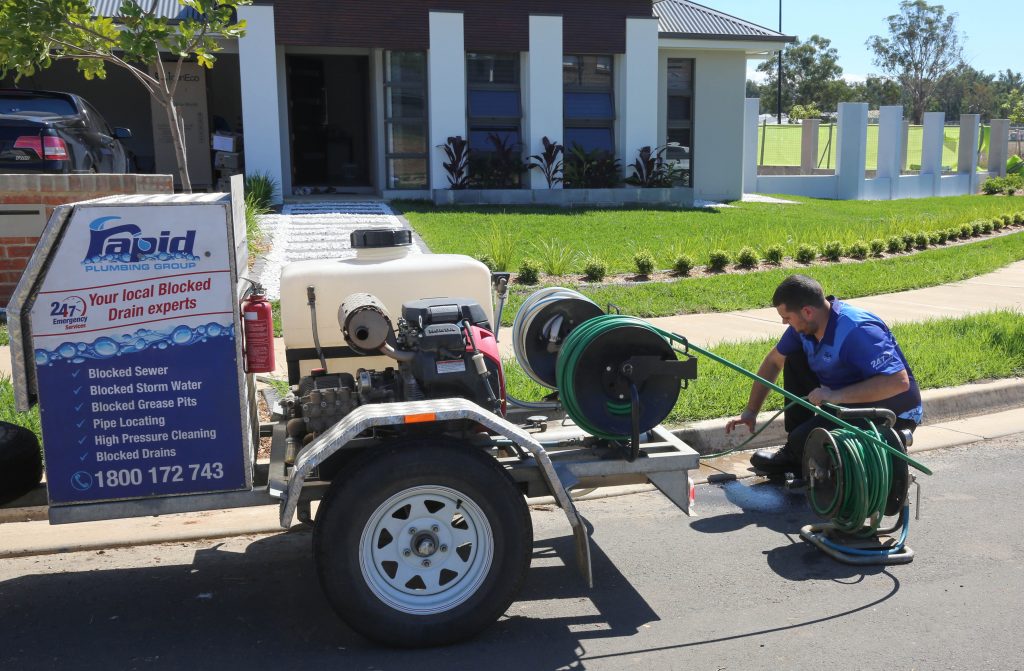
High pressure water jetting. Where a cable cuts a path through, jetting scours the pipe wall. A specialised nozzle fires water backwards at pressure, drawing the hose along the line and flushing grease, silt and root fragments ahead of it. For kitchen lines caked in hardened fat, and for any drain that has blocked more than once, this gives the better result, because it restores the pipe closer to full diameter instead of punching a hole through the middle.
Working out the cause. Clearing the line is the immediate fix. The valuable part is identifying why it blocked, because root intrusion, a sagging section and a household habit each call for different follow up: maintenance jetting, a pipe repair, or simply changing what goes down the sink.
If the problem is the toilet rather than the line itself, the approach differs again. Our guide on telling a blocked toilet from a blocked drain is worth a read before you book.
| Not sure whether you need a clear or a repair? Local Quakers Hill Plumber is family owned and operated, fully insured, and we quote free of charge before any work starts, so you know the cost upfront. Request a free quote and we will talk you through your options honestly, including the ones that cost us less. |
When a blocked drain becomes an emergency
Most blockages can wait for a booked appointment. Some cannot. Treat it as urgent if you are seeing any of these:
- Sewage backing up into a shower, bath, floor waste or laundry tub
- The overflow relief gully outside spilling
- Every fixture in the house draining slowly or not at all
- Wastewater pooling near the slab or entering the building
- A strong sewage smell inside that ventilation will not clear
These carry a real hygiene risk and can cause water damage fast, so they warrant a same day call. We keep emergency plumbing available around the clock for exactly this reason. In the meantime, stop using water in the house, including the washing machine and dishwasher, because every litre adds to what already has nowhere to go.
Keeping your drains clear year round
Prevention is cheap compared with a repeat callout, and most of it takes almost no effort.
- Never pour fat or oil down the sink. Cool it in the pan, scrape it into the bin, then wash up and run the hot tap for thirty seconds to move any residue along.
- Use sink and shower strainers. A few dollars each, and they catch the scraps and hair that start most soft blockages.
- Only flush the three Ps. Pee, poo and paper. Wipes go in the bin whatever the packet claims.
- Clear gutters and stormwater pits before storm season. Especially with deciduous trees or overhanging natives.
- Plant clear of the sewer line, and book preventative jetting if roots are a known issue. Homes with a history of intrusion do better on a maintenance cycle than waiting for the next blockage.
Key takeaways
- Slow drains, gurgling and smells are early warnings, not minor annoyances.
- Tree roots and hardened grease cause most serious blockages in local homes.
- Supermarket drain chemicals are best avoided, particularly on a fully blocked line.
- Clearing the blockage is half the job. Finding out why it happened stops it recurring.
| Blocked drain in Quakers Hill? Call 02 9158 3597. Local Quakers Hill Plumber is available 24/7 across Quakers Hill and the surrounding suburbs, from Acacia Gardens and Parklea through to Schofields, Marayong and Blacktown. Free quotes, upfront pricing, fully qualified tradespeople who clean up after themselves. Call 02 9158 3597 now, or see our Quakers Hill service area for more on what we cover locally. |
Frequently asked questions
How much does it cost to clear a blocked drain in Quakers Hill?
It depends on where the blockage sits, what is causing it, and whether the line needs jetting or just a cable clear. A straightforward branch line clear sits at the lower end, while a root affected main line costs more. Local Quakers Hill Plumber quotes free of charge before work begins, so you are never guessing at the final figure.
Can I use a supermarket drain cleaner on a blocked drain?
Best avoided, particularly on a fully blocked drain. Caustic products sit in the line rather than flowing through, can generate heat, may damage older pipework and seals, and create a hazard for anyone opening the pipe afterwards. They also do nothing to tree roots.
Why does my drain keep blocking in the same spot?
Repeat blockages in one location usually mean something structural is involved: root intrusion at a cracked joint, a sagging section where waste settles, or a partial collapse. Clearing it restores flow temporarily, but the underlying defect needs identifying and repairing to break the cycle.
Who is responsible for a blocked sewer, me or Sydney Water?
As a general rule the property owner is responsible for the sewer pipes on their property up to the connection point, and Sydney Water looks after the mains beyond that. Responsibility can differ for strata properties and in some situations, so if you are unsure it is worth confirming with Sydney Water directly before arranging work.
Do you need to dig up my yard to fix a blocked drain?
In most cases, no. Most blockages are cleared through existing access points with a drain machine or high pressure jetting, no excavation involved. Digging generally only comes into it when a section of pipe is broken or collapsed and needs replacing.